Wisconsin 2027 State Freight Plan

We invite you to learn more about and provide your feedback on Wisconsin’s Draft 2027 State Freight Plan. We're updating Wisconsin's 2023 State Freight Plan, which is a long-range multimodal plan that addresses the state's freight transportation needs and provides a vision for WisDOT’s freight program for the next eight years! It is important that we update this plan regularly to incorporate new data and trends related to our state’s current and future freight needs. Use the arrows on the left and right sides of the screen or the tabs at the top of the page to click through content.
Please spend a few minutes clicking through the slides to read more about WisDOT’s family of plans, learn about the State Freight Plan update and Wisconsin’s freight system, and review the draft plan. Use the comment tool in the top right corner of the page to provide thoughts and comments as you read. Please be sure to identify the section you’re referencing your comment to in the drop down. This helps us identify your comments’ direction easier.
In addition, on the last slide there is an interactive comment map that offers an opportunity to comment on an issue at a specific location.
Planning NOW for the future of transportation in Wisconsin
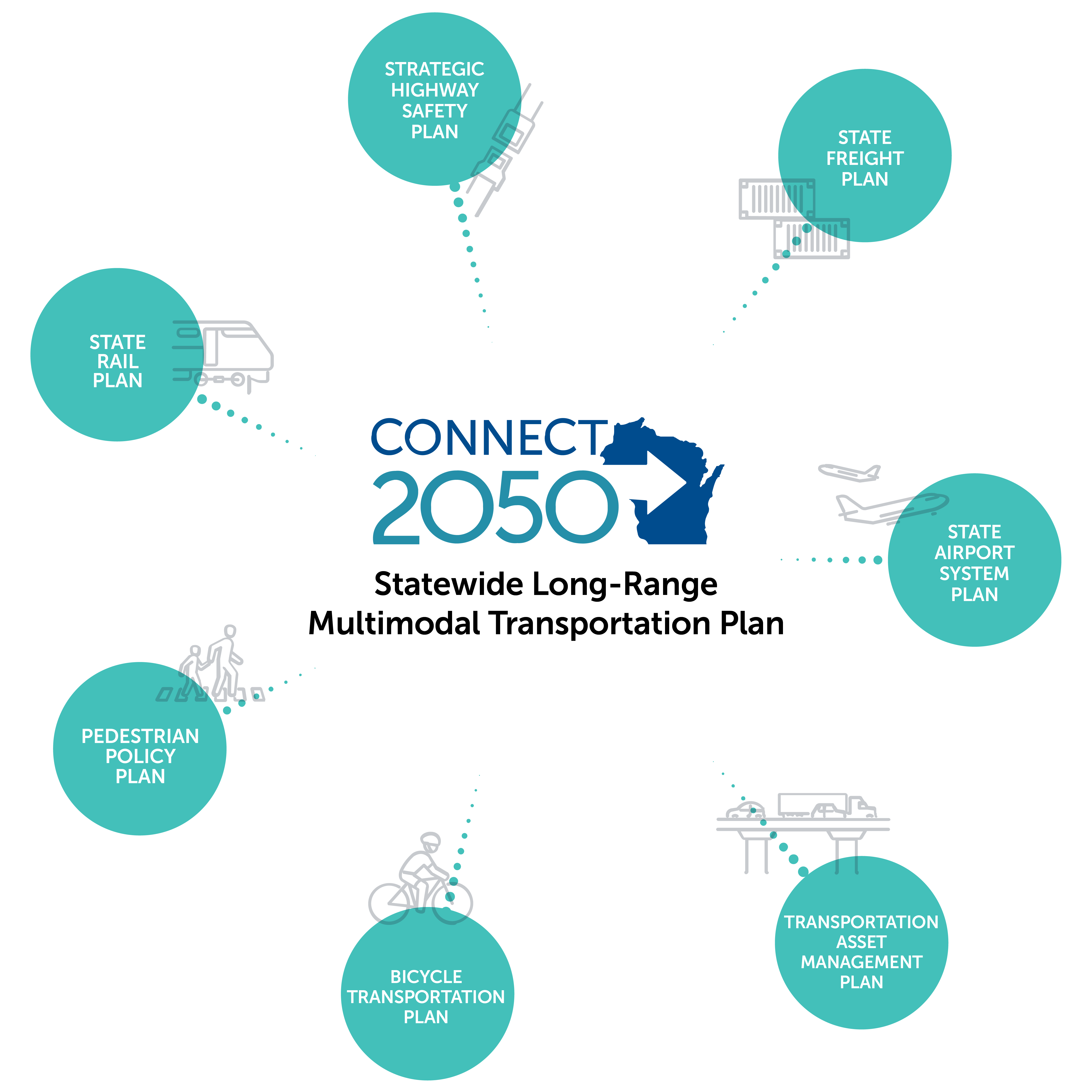
Let’s start off with some background information on Wisconsin’s family of transportation plans. Connect 2050, which is WisDOT’s statewide, long-range multimodal transportation plan, provides what should be accomplished and the State Freight Plan will identify the how!
WisDOT Plans
WisDOT envisions an integrated multimodal transportation system that maximizes the safe and efficient movement of people and products throughout the state in a way that enhances economic productivity, transportation accessibility, and the quality of Wisconsin's communities while minimizing impacts to the natural environment and socioeconomic, historic, and cultural resources.
Connect 2050
Connect 2050 is a vision plan, setting an overall direction for our transportation system and establishing goals and objectives based on transportation-related issues and trends, and comments from people like you. Unlike a transportation project that is happening now or in the near future, Connect 2050 affects decisions about plans and projects that will be completed and funded years from now.
Wisconsin's Transportation System
WisDOT plans, builds, maintains, and/or financially supports all of these types of transportation, which make up our statewide network. The Connect 2050 plan's goals and objectives apply to all the modes listed below.
- Airports
- Ports, Harbors, and Ferries
- Truck Freight
- Personal Automobiles
- Bicycles and Pedestrians
- Passenger Rail
- Freight Rail
- Transit
- Intercity Passenger Bus
Chapter 1: Executive Summary
The Wisconsin State Freight Plan serves as a comprehensive blueprint for enhancing the state’s multimodal freight transportation system. This plan addresses the critical role freight movement plays in Wisconsin’s economic vitality and quality of life, guiding strategic investments across highways, railroads, waterways, airports, and pipelines.
Goals
- Enhance safety, security, and resiliency across all freight modes
- Ensure system preservation and enhancement of critical infrastructure
- Enhance system mobility, operations, reliability, efficiency, and connectivity throughout Wisconsin
Economic Context
In 2023, Wisconsin moved over 702 million tons of freight valued at more than $836 billion. Trucking dominates freight movement, accounting for approximately 70% of tonnage and 74% of value.
System Inventory and Performance
Highway System
Wisconsin maintains 116,000 roadway miles, including 11,700 state, federal, and interstate highway miles.
Rail Network
Wisconsin’s rail system includes 3,229 miles of track operated by Class I, regional, and short line railroads.
Ports and Waterways
Wisconsin’s 29 commercial ports and 230 miles of navigable waterways connect to the Great Lakes-St. Lawrence Seaway and Mississippi River systems.
Aviation
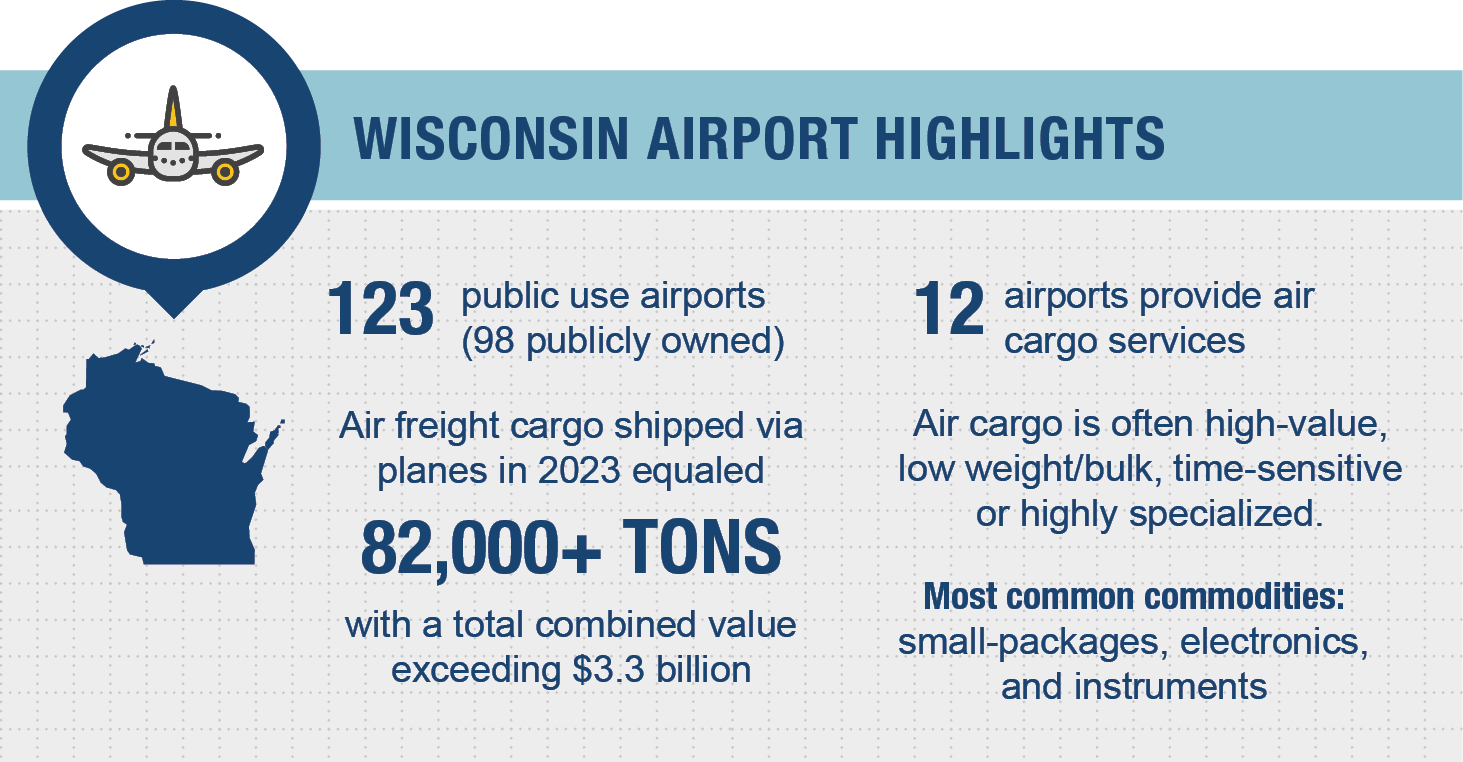
Wisconsin’s air cargo system includes multiple airports handling freight, with Milwaukee’s new air cargo facility positioned to drive growth.
Pipelines
Over 80,000 miles of pipeline transport natural gas, petroleum products, and other chemicals, valued at $8.7 billion in 2025.
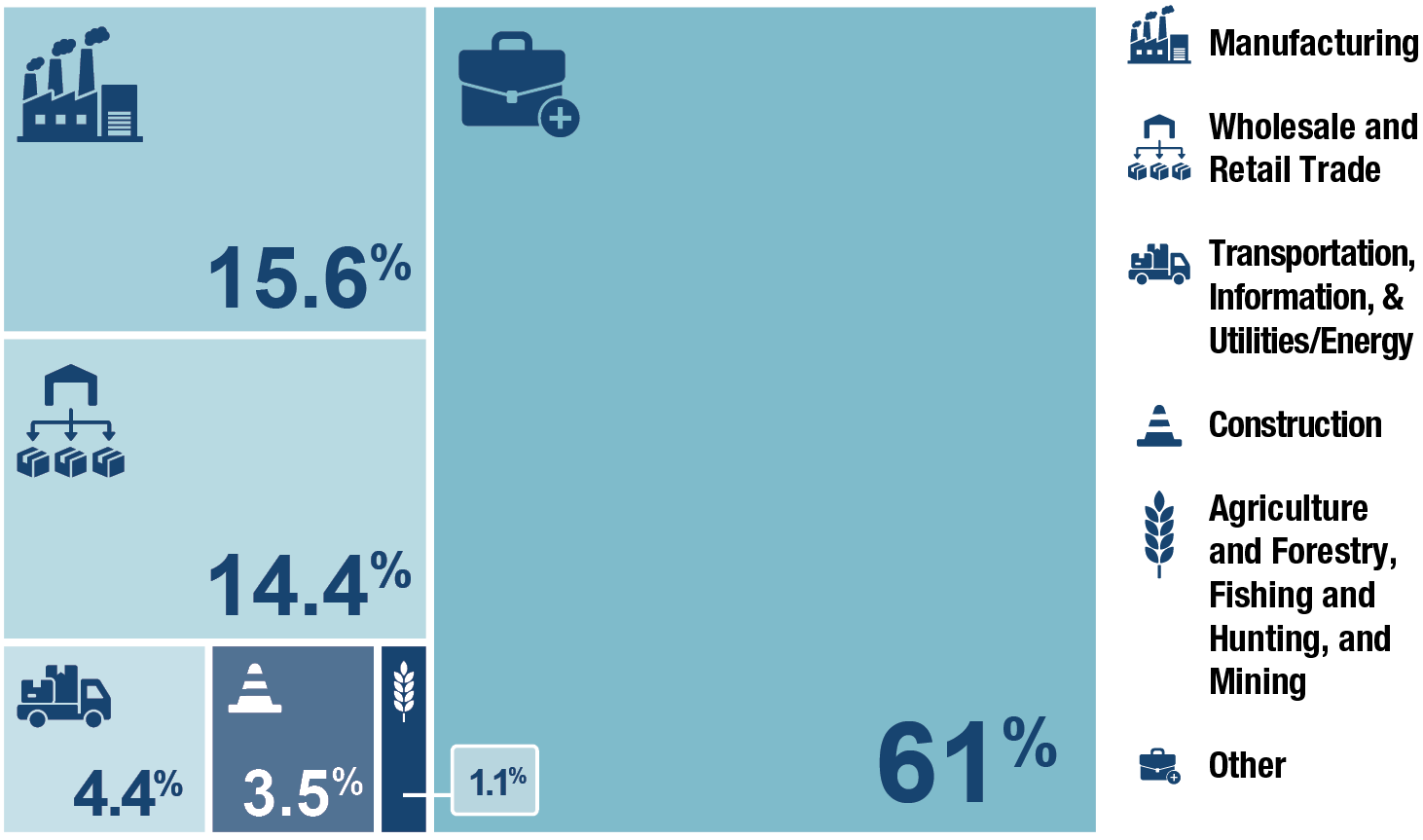
Percent of Total WI Employment (Q1-Q3 2025)
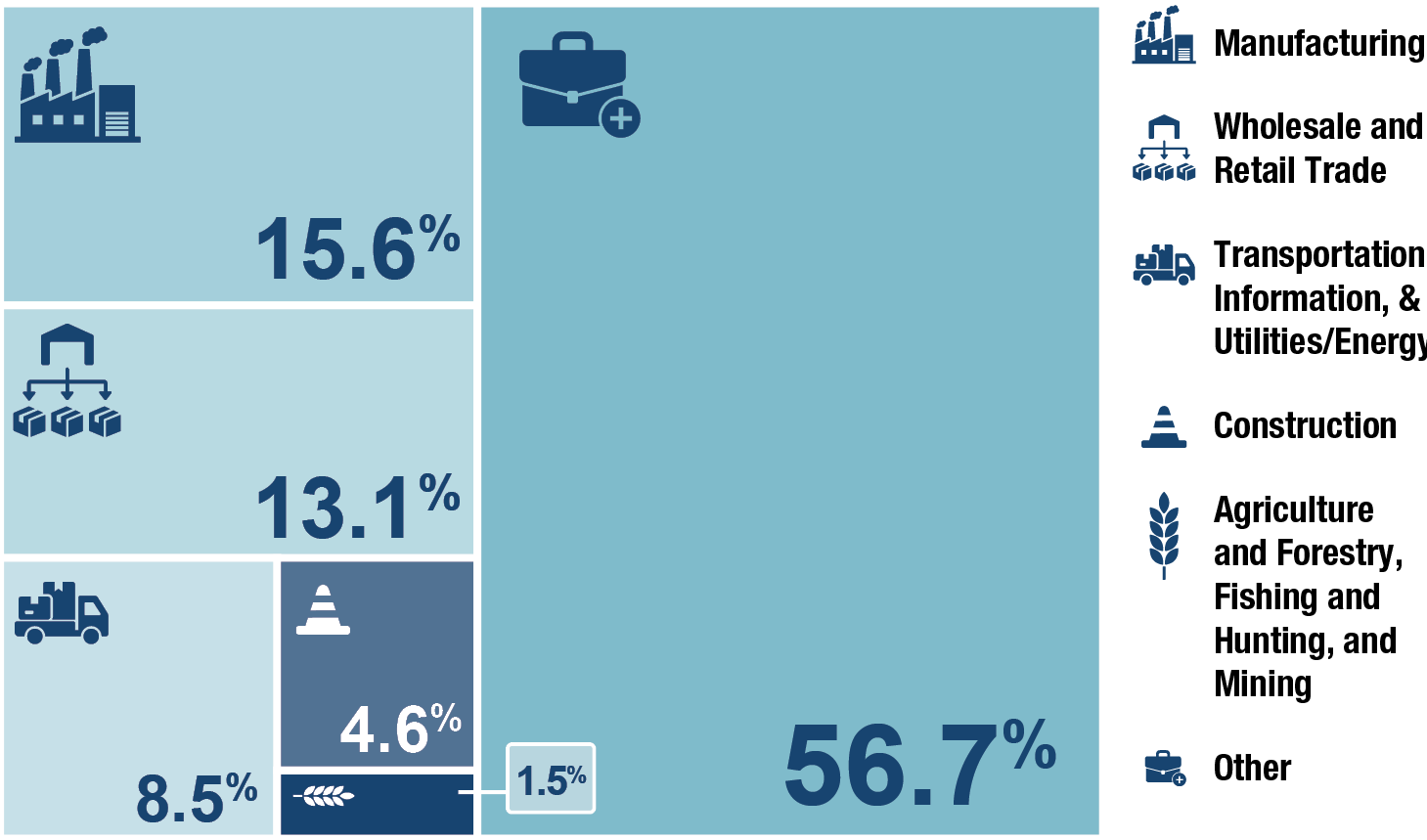
Percent of Total WI GDP 2025
Freight Trends and Challenges
- E-Commerce Growth
- Workforce Challenges
- Technology Integration
- Supply Chain Resilience
Implementation and Monitoring
 Implementation and Monitoring
Chapter 2: Introduction
Wisconsin’s freight transportation system supports the movement of the goods that people and businesses rely on every day, making it a key part of the state’s economy and quality of life. The Wisconsin State Freight Plan helps identify transportation needs and investment priorities so the state can maintain a safe, efficient, and connected network that supports economic growth and the movement of freight now and in the future.
National Freight Policy
Federal requirements for transportation infrastructure planning and investments are prescribed through the most recent federal transportation authorization bill, the Infrastructure Investment and Jobs Act (IIJA), as well as several final rulemakings issued by the U.S. Department of Transportation.
IIJA Guidance
Under the IIJA, a strong emphasis is placed on the incorporation of freight into transportation planning processes. It also identifies additional requirements for state freight plans. These plans must be updated every four years and meet the 17 requirements outlined in the IIJA.
U.S. DOT Guidance
The National Freight Strategic Plan, released in May 2026, defines the U.S. DOT’s vision and goals for the Nation’s multimodal freight system and defines strategies to achieve those goals.
- A Safe Freight System: Reduce or eliminate serious injuries and fatalities of the freight system.
- An Efficient Freight System: Improve system reliability and streamline government regulation.
- A Secure Freight System: Ensure the integrity of our Nation’s supply chains in support of national defense and economic prosperity.
- A Resilient Freight System: Reduce risks to the freight system and improve our response approaches.
- An Innovative Freight System: Modernize freight infrastructure and foster game changing technologies.
- A Capable Freight Workforce: Build a skilled workforce for the 21st Century and improve quality of life.
Public Stakeholder
This is You!
There are several ways for the public to provide feedback, including this online open house, a robust plan website, and multiple public outreach opportunities.
Public involvement is an important part of the Wisconsin State Freight Plan, helping ensure that the plan reflects the needs, concerns, and perspectives of transportation system users across the state. Throughout the planning process, including this public comment period, WisDOT has provided opportunities for freight stakeholders and the public to learn about the plan, review information, and share feedback. These engagement opportunities are designed to encourage participation, gather diverse viewpoints, and help inform future freight transportation decisions.
Routine Stakeholders
- Federal Organizations
- Regional and Local Partners
- Wisconsin State Government Organizations
- Local Government Partners
- Private Sector Partners
- Multi-State Freight Compacts
- Freight Advisory Committee
Did you know?
Chapter 4: Economic Context of Freight
To support Wisconsin’s long-term economic competitiveness and quality of life, WisDOT must plan for how changes in freight movement may affect businesses, supply chains, and communities across the state. This chapter examines projected freight trends, providing insight into how the movement of goods by different transportation modes could influence future transportation needs, infrastructure investments, and economic activity throughout Wisconsin.
Mode Comparison
In 2023, more than $836 billion in freight moved through Wisconsin, with trucks carrying the majority of shipments by both tonnage and value. While the total tonnage of freight declined compared to the previous freight plan, the overall value of goods transported increased. Trucking remains Wisconsin's dominant freight mode, followed by rail, water, air, and other modes, reflecting freight transportation patterns seen across the United States.
Wisconsin is consistent with the nation. The majority of shipments whether by tonnage or value is transported with trucks. For tonnage, after trucking the most heavily-relied upon modes in the U.S. are other, rail, water, and then air. After trucking, the modes carrying the highest value of freight across the U.S. are other, air, rail, and water.
Wisconsin Freight Shipments by Volume (tons)
| Mode | 2023 Actual | 2034 Actual | 2050 Actual |
|---|---|---|---|
| Highway | 489,393,504 | 543,034,918 | 631,660,268 |
| Rail | 193,380,283 | 264,301,202 | 416,312,457 |
| Waterborne | 19,879,017 | 25,668,938 | 37,231,836 |
| Air | 81,783 | 119,909 | 209,192 |
Wisconsin Freight Shipments by Value ($)
| Mode | 2023 Total | 2034 Total | 2040 Total |
|---|---|---|---|
| Highway | $620,337,112,323 | $651,316,015,237 | $699,092,627,386 |
| Rail | $208,162,225,230 | $274,654,931,702 | $411,080,974,820 |
| Waterborne | $4,584,383,821 | $4,627,939,057 | $4,691,556,369 |
| Air | $3,316,579,971 | $7,696,913,405 | $26,192,701,877 |
Connection to the Global Economy
Economic success depends, in part, on maintaining efficient freight connections, allowing Wisconsin businesses to compete in global markets and adapt to changing trade patterns.
- International trade is a major part of Wisconsin’s economy, with businesses importing and exporting goods worldwide and relying on a strong multimodal transportation network to reach global markets. Canada and Mexico are Wisconsin’s most important trade partners, serving as leading destinations for exports and major sources of imports.
- Exports support jobs and business growth, helping Wisconsin companies access new markets, increase revenue, expand operations, and support more than 100,000 jobs statewide. Small and medium-sized businesses play a crucial role in exporting, accounting for 86% of Wisconsin companies that export products internationally.
- Imports are also critical to Wisconsin’s economy, providing businesses with goods, materials, and products that support production, supply chains, and consumer demand.
- Manufacturing remains a cornerstone of Wisconsin trade, with machinery, electronics, transportation equipment, chemicals, and food products among the state's top export commodities.
Freight-Related Industries and Supply Chains
Freight is the backbone of supply chains. Many products require multiple freight movements as raw materials are collected, processed, manufactured, distributed, and delivered.
- Wisconsin’s economy depends on freight-intensive industries. Agriculture, forestry, manufacturing, food production, construction materials, healthcare, retail, and tourism all rely on efficient freight transportation.
- Agriculture and manufacturing are major freight drivers. Wisconsin's dairy, food processing, paper production, machinery, transportation equipment, and biohealth sectors generate significant freight activity and support jobs across the state.
- Warehousing and distribution are growing. Logistics and distribution centers, particularly along major interstate corridors, play an increasingly important role in connecting producers, businesses, and consumers.
- Freight supports everyday life. Beyond industrial uses, freight transportation delivers the food, medical supplies, consumer products, equipment, and materials that Wisconsin residents and businesses rely on every day.
Freight Movement
To meet the freight transportation needs of tomorrow, WisDOT needs to begin preparing today. This section outlines the estimated growth in freight tonnage and value by mode transported from, to, within, and through Wisconsin for target years 2034 and 2050.
Wisconsin Modal Tonnage and Value Forecast Estimates
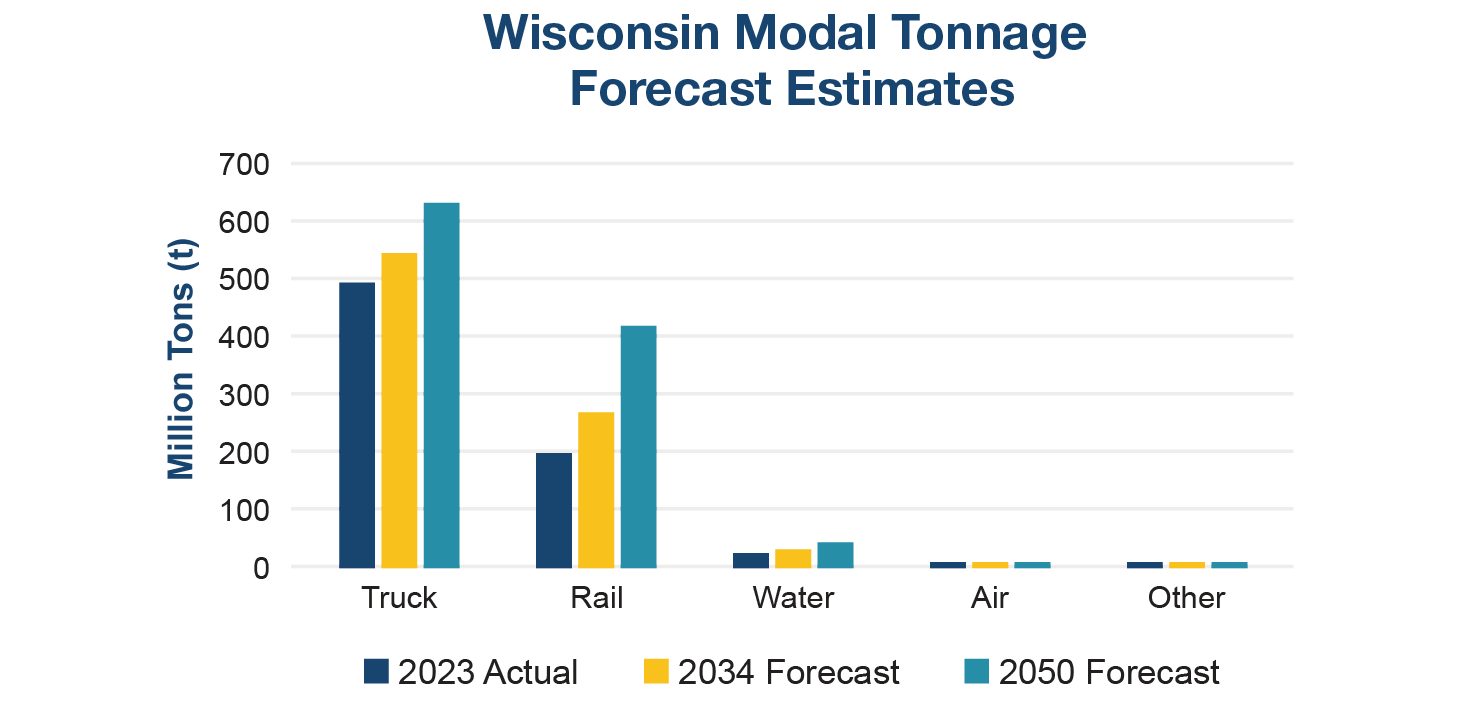
Wisconsin Modal Tonnage and Value Forecast Estimates
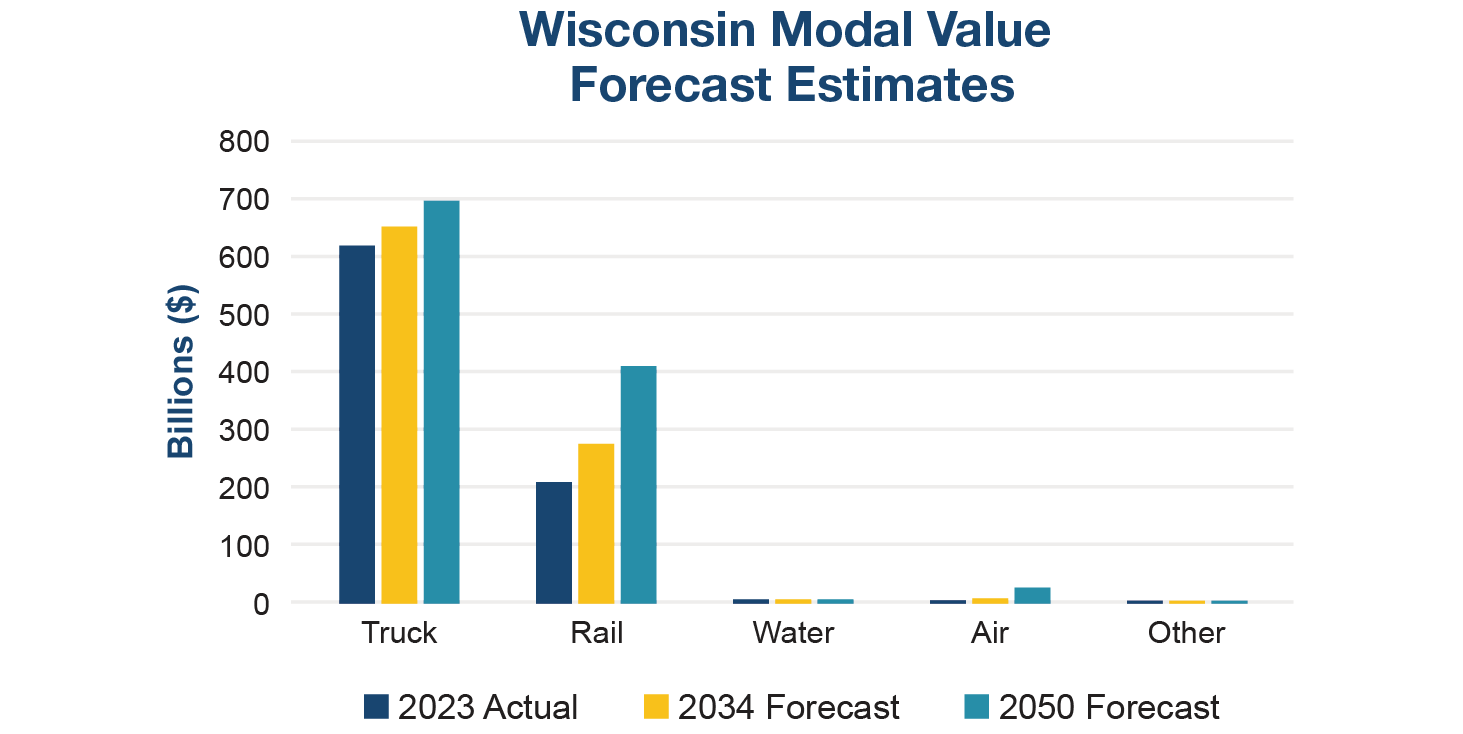
Explore the forecasts for different transportation modes below.
WisDOT forecasts that trucking will remain Wisconsin’s dominant freight transportation mode through 2050, carrying the largest share of freight by both tonnage and value. Truck freight volumes are projected to increase from 489.4 million tons in 2023 to 543.0 million tons in 2034 and 631.7 million tons by 2050, while the value of truck shipments is expected to grow from $620.3 billion to $699.1 billion over the same period. Although trucking’s share of total freight is forecast to gradually decline as other modes grow, Wisconsin highways are still expected to carry nearly 632 million tons of freight valued at approximately $699 billion by 2050.
Rail freight is projected to experience substantial growth through 2050, with tonnage increasing by 115.3 percent from 193.4 million tons in 2023 to more than 416 million tons statewide. The value of goods moved by rail is also forecast to nearly double, growing 97.5 percent from $208.2 billion in 2023 to approximately $411 billion by 2050. While much of Wisconsin’s rail traffic consists of freight passing through the state between other origins and destinations, Wisconsin rail lines are expected to carry 416 million tons of freight valued at more than $411 billion by 2050.
Waterborne freight is projected to see strong growth in shipment volumes through 2050, with tonnage increasing by 87.3 percent from 19.9 million tons in 2023 to 37.2 million tons. However, the value of goods moved by water is expected to grow by only 2.3 percent over the same period, making it the slowest-growing mode in terms of freight value. By 2050, waterborne freight is forecast to carry 37.2 million tons of cargo, representing about 3.4 percent of Wisconsin’s freight tonnage, while accounting for just 0.4 percent of total freight value.
While air cargo represents a very small share of Wisconsin’s freight by weight, it plays an important role in moving high-value, time-sensitive products that support modern supply chains and just-in-time delivery practices. Air freight is forecast to experience the fastest growth of any freight mode, with tonnage increasing by 155.8 percent and cargo value increasing nearly seven-fold (689.8 percent) between 2023 and 2050. Wisconsin airports are projected to handle more than 209,000 tons of air cargo valued at approximately $26 billion by 2050, with future growth potentially influenced by major facilities such as Milwaukee’s new international air cargo hub.
Pipeline infrastructure and operational data are largely owned and maintained by private companies, making detailed information difficult to access due to security and confidentiality considerations. While national freight datasets provide estimates of pipeline movements, these figures are generally intended for broad regional analysis and are not sufficiently detailed or reliable for forecasting freight flows at the local or county level.

Chapter 5: System Inventory and Performance Indicators
The United States transportation system is a vast, complex network of over seven million miles of highways, local roads, railways, navigable waterways, and pipelines. The system connects Wisconsin’s key gateways and corridors to the nation and plays an important role in linking Wisconsin to the global economy.
Freight Networks
Recognizing the importance of multimodal connections, the Fixing America’s Surface Transportation (FAST) Act directed the U.S. DOT to establish the National Multimodal Freight Network (NMFN).
In addition to the NMFN, the FAST Act directed the FHWA Administrator to establish a National Highway Freight Network (NHFN) to aid in strategically directing federal resources and policies toward improved performance of highway portions of the United States freight transportation system.
The NHFN includes the following subsystems of roadways:
- Primary Highway Freight System (PHFS)
- Critical Rural Freight Corridors (CRFCs)
- Critical Urban Freight Corridors (CUFCs)
- Other interstate portions not designated as part of the PHFS
Two networks relevant to strategic freight movements for military defense are included in the definition of the NMFN.
- STRAHNET (Strategic Highway Network): This network consists of roadways critical to the Department of Defense’s (DOD) domestic operations. In Wisconsin, this consists of I-94, I-39, I-43, I-41, I-90, and portions of WI 21.
- STRACNET (Strategic Rail Corridor Network): These corridors have been determined critical to DOD domestic operations. In Wisconsin, STRACNET consists of the CPKC Railway line between Kenosha and La Crosse.
Two army bases (Fort McCoy, Camp Douglas) in Wisconsin provide facilities and support for the training and readiness of military personnel for all branches of the U.S. Armed Forces. Additionally, Army National Guard units in Wisconsin include the following locations:
- 32nd “Red Arrow” Infantry Brigade Combat Team, Camp Douglas
- 64th Troop Command, Madison
- 157th Maneuver Enhancement Brigade, Milwaukee
- 426th Regiment (Regional Training Institute), Fort McCoy
Performance Measures
Management of the transportation system requires comprehensive data, appropriate measures, and a consistent method for assessment. A key component of this assessment is the development and application of performance measures.
WisDOT’s performance improvement program is known as MAPSS, which stands for Mobility, Accountability, Preservation, Safety, and Service—and includes measures that meet IIJA requirements. The department’s freight-related MAPSS performance measures are focused, measurable, and drive performance improvement.
Did you know?
WisDOT MAPSS freight-related performance improvement program measures include the following:
Mobility
- Delay, Reliability, Incident Response, Winter Response
Accountability
- TEA Grants, On-time Performance
Preservation
- State Highway Pavement Condition, State Bridge Condition, State-owned and State-supported Rail Line Conditions, Airport Pavement Condition, Local Bridge Condition
Safety
- Traffic Fatalities, Serious Traffic Injuries, Traffic Crashes, Safety Belt Use
Modal Snapshots
Highway System
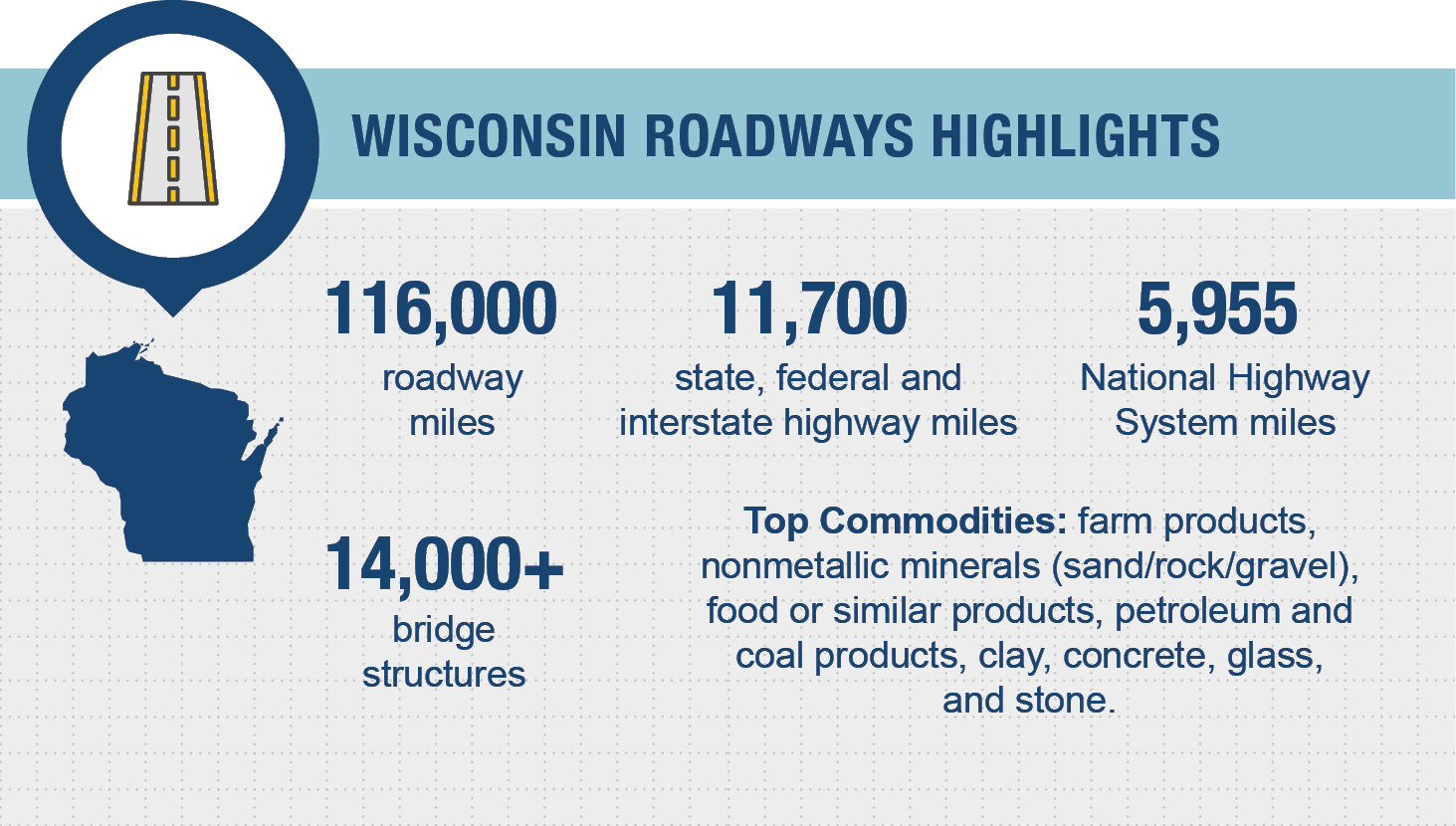
While the overall transportation network remains safe, reliable, and well maintained, increasing congestion in metropolitan areas and rising vehicle hours of delay highlight emerging challenges. Continued investment in infrastructure preservation, capacity improvements, congestion management, and effective asset management will be critical to maintaining system performance, supporting freight movement, and ensuring long-term mobility and economic growth across Wisconsin.
Railroad
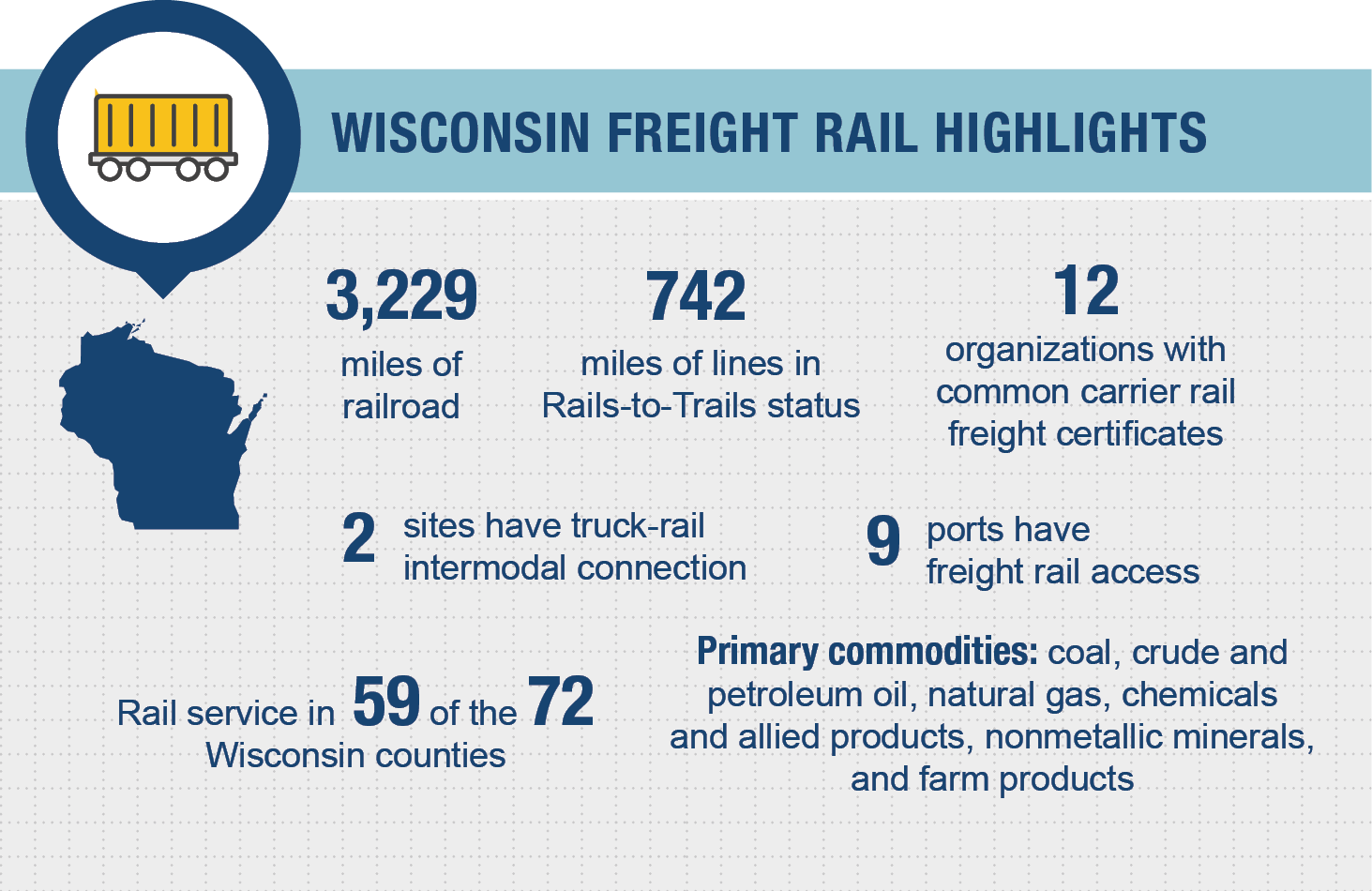
WisDOT works in partnership with the railroad operators on the active rail lines owned by WisDOT to review conditions, discuss capital improvement needs, and schedule projects. WisDOT’s primary focus is on monitoring system performance on state-owned and state-supported rail lines.
Ports and Waterways
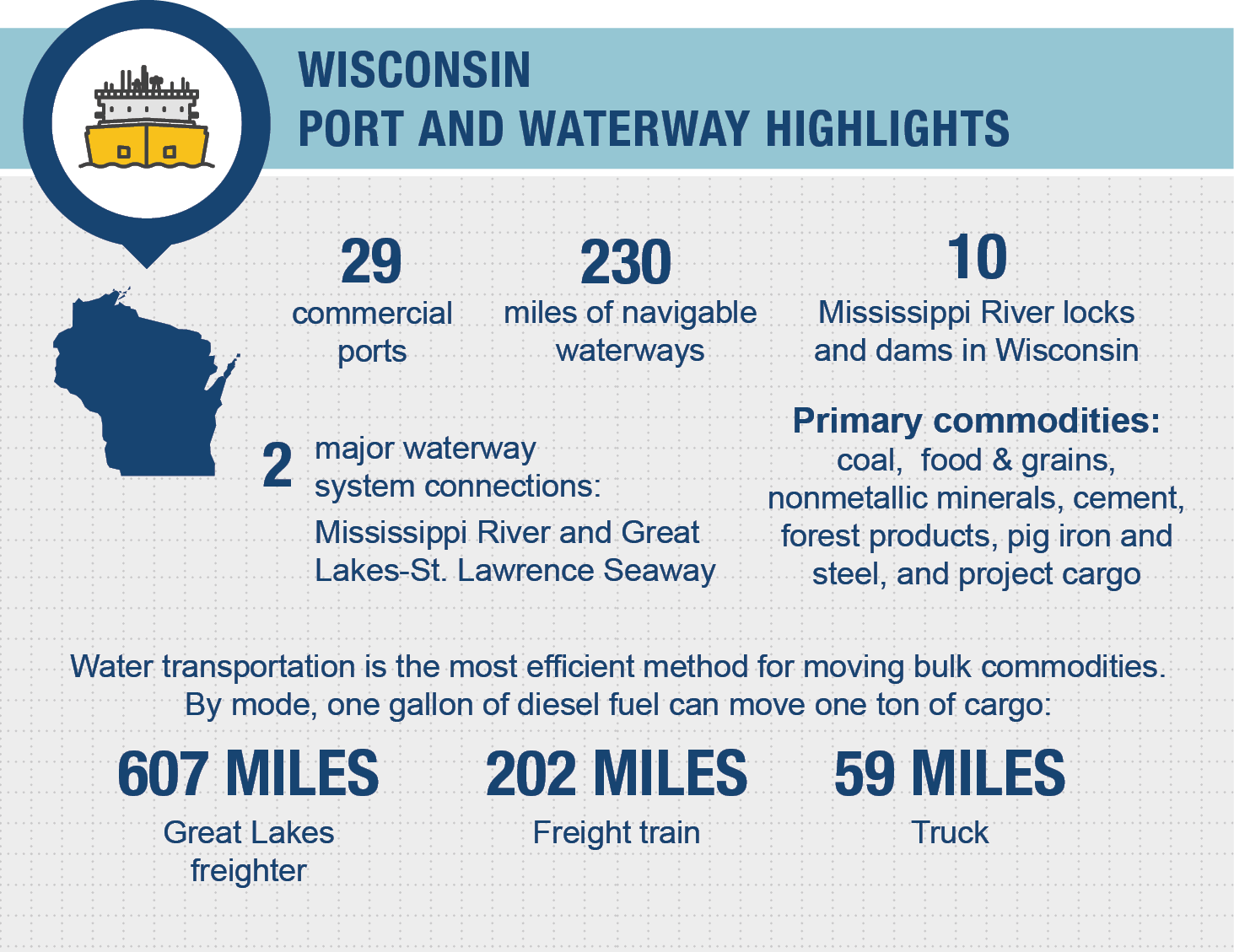
Wisconsin’s port facilities serve as multimodal distribution centers linking waterborne vessels (ships and barges) with an extensive network of highways, railroads, and airports. As centers of economic activity, Wisconsin’s ports and harbors include the operations of local and municipal government agencies; federal agencies such as the Coast Guard and United States Army Corps of Engineers (USACE); and private companies that contract with these agencies.
Aviation
WisDOT’s MAPSS measures include a measurement of the percent of airport pavements rated at a fair or above condition. In 2025 Wisconsin fell just short of its goal of 90 percent of primary runways meeting that condition, with 87 percent being rated at fair or above.
Pipeline
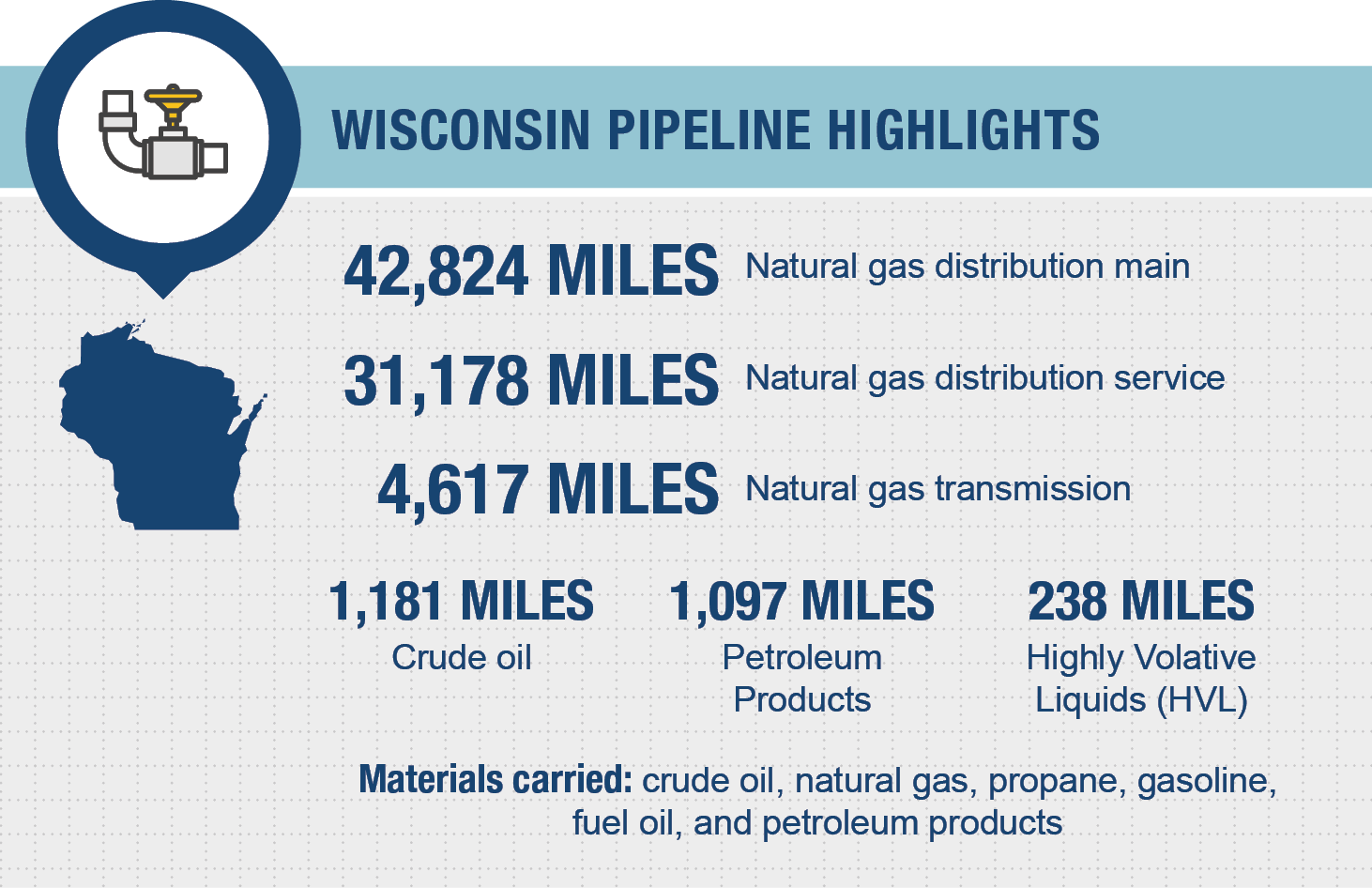
Wisconsin is not a producer of natural gas or crude oil, but the state relies on natural gas and refined petroleum products to fuel economic activity. The pipeline system is privately-owned and used primarily for transmission and distribution of petroleum products and natural gas. The pipelines are also important to interstate commerce, carrying crude oil through the state to refineries elsewhere. Pipelines dedicated to the movement of natural gas make up 97 percent of all pipeline miles in Wisconsin.
Freight-Generating Sites
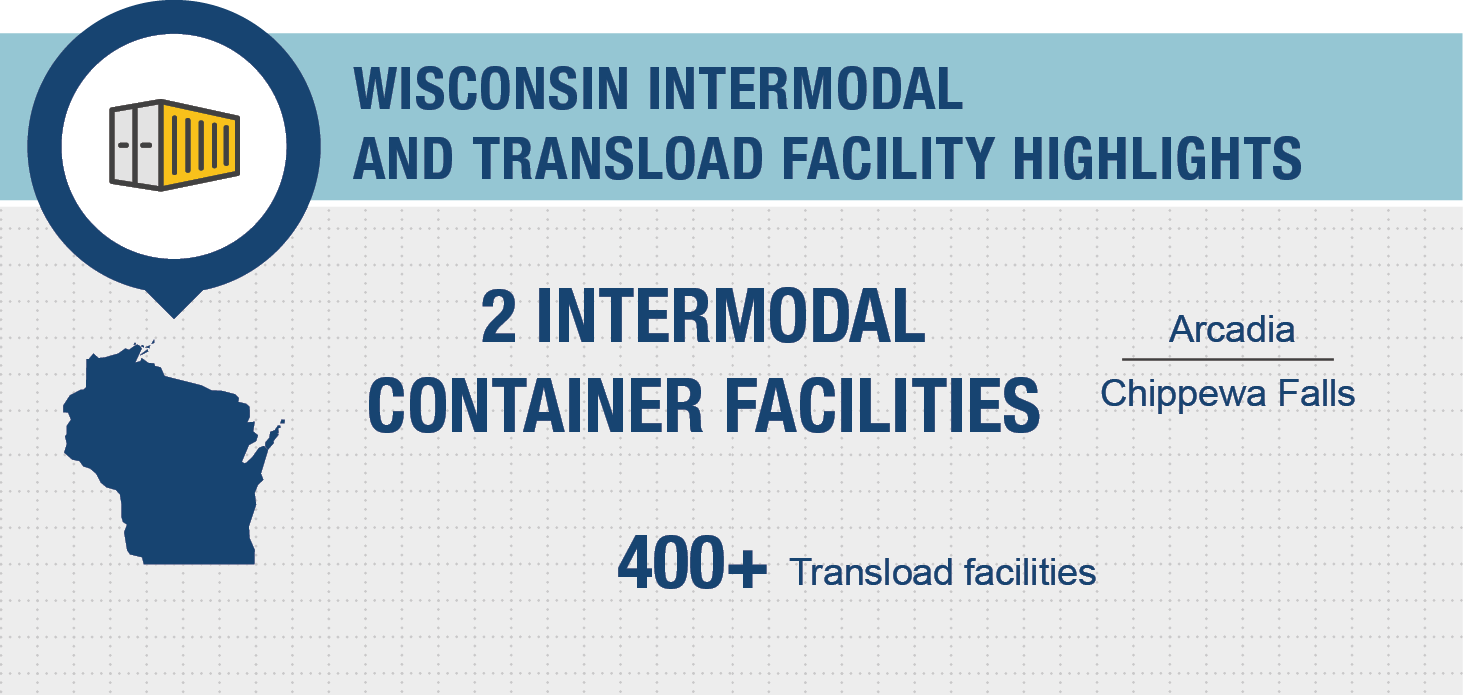
Freight facilities across Wisconsin support the movement of goods, connecting suppliers, manufacturers, warehouses, distribution centers, airports, and ports to regional, national, and global markets. Manufacturing, logistics, and distribution are key drivers of freight demand, relying on efficient transportation networks to move raw materials, finished products, and consumer goods. A multimodal transportation system is essential to supply chain success, with trucks, rail, waterways, airports, and ports each playing important roles in moving goods efficiently and connecting Wisconsin businesses to broader markets.
Chapter 6: Freight Trends and Challenges
Numerous major trends and challenges impact freight flow volume, routing, and the economic value of the commodities shipped in Wisconsin over the near- and long-term. Freight trends are discussed through the lenses of global, national, and state level impacts.
Explore the Freight Trends that are interesting to you:
Global Trade and Supply Chains
- The future of North American trade remains closely tied to the United States-Mexico-Canada Agreement (USMCA), with key discussions focused on industries such as automotive manufacturing, steel, agriculture, pharmaceuticals, and the reshoring of critical supply chains. Agriculture alone accounts for $149 billion in U.S. exports to Canada and Mexico and supports nearly 500,000 jobs, highlighting the agreement’s economic importance.
- Cross-border transportation infrastructure plays a critical role in supporting trade, including the $4.4 billion Gordie Howe International Bridge and major freight gateways along the Canadian and Mexican borders. In 2025, 2.1 million trucks crossed the Blue Water Bridge and 1.8 million crossed the Ambassador Bridge, demonstrating the scale of trade moving between the U.S. and Canada.
- Trade with Mexico continues to grow in importance, supported by major freight hubs and infrastructure investments. By April 2026, Port Laredo handled nearly $34.2 billion in monthly trade, while a new rail bridge at the crossing more than doubled rail freight capacity, helping improve the flow of goods between the two countries.
International Trade
- U.S. trade policies and tariffs can influence where goods are produced and how freight moves through Wisconsin, and in 2025 a notable shift occurred when China's share of U.S. imports fell below 10% for the first time in decades, while 36.2% of U.S. imports were subject to new tariffs, contributing to growth in trade with Mexico and other nearshoring partners.
On/Near Shoring
- As companies reevaluate global supply chains, trends such as nearshoring and reshoring are shifting some manufacturing closer to end markets, with Harley-Davidson planning to return production activities to Wisconsin and Pennsylvania and manufacture more than 100,000 motorcycles annually at its Pennsylvania facility by 2028, illustrating how freight and transportation needs can be affected by changes in production locations.
E-Commerce
E-commerce continues to reshape consumer purchasing and freight transportation patterns, driving growth in delivery volumes and increasing demand for efficient logistics networks. As online shopping expands, transportation systems and fulfillment facilities are adapting to handle higher freight activity, particularly for last-mile deliveries and rapid shipping expectations.
- E-commerce accounted for 16.6% of all retail sales in the fourth quarter of 2025, with online sales growing 5.3% year-over-year, nearly double the growth rate of total retail sales (2.7%).
- Amazon remained the largest e-commerce marketplace, generating approximately $300 billion in third-party sales in 2025, far exceeding other online retail platforms.
- E-commerce generates significant freight and transportation demand, with last-mile delivery accounting for 53% of total delivery costs, and a typical 625,000-square-foot fulfillment center generating nearly 2,800 daily vehicle trips.
Demographic and Workforce Changes
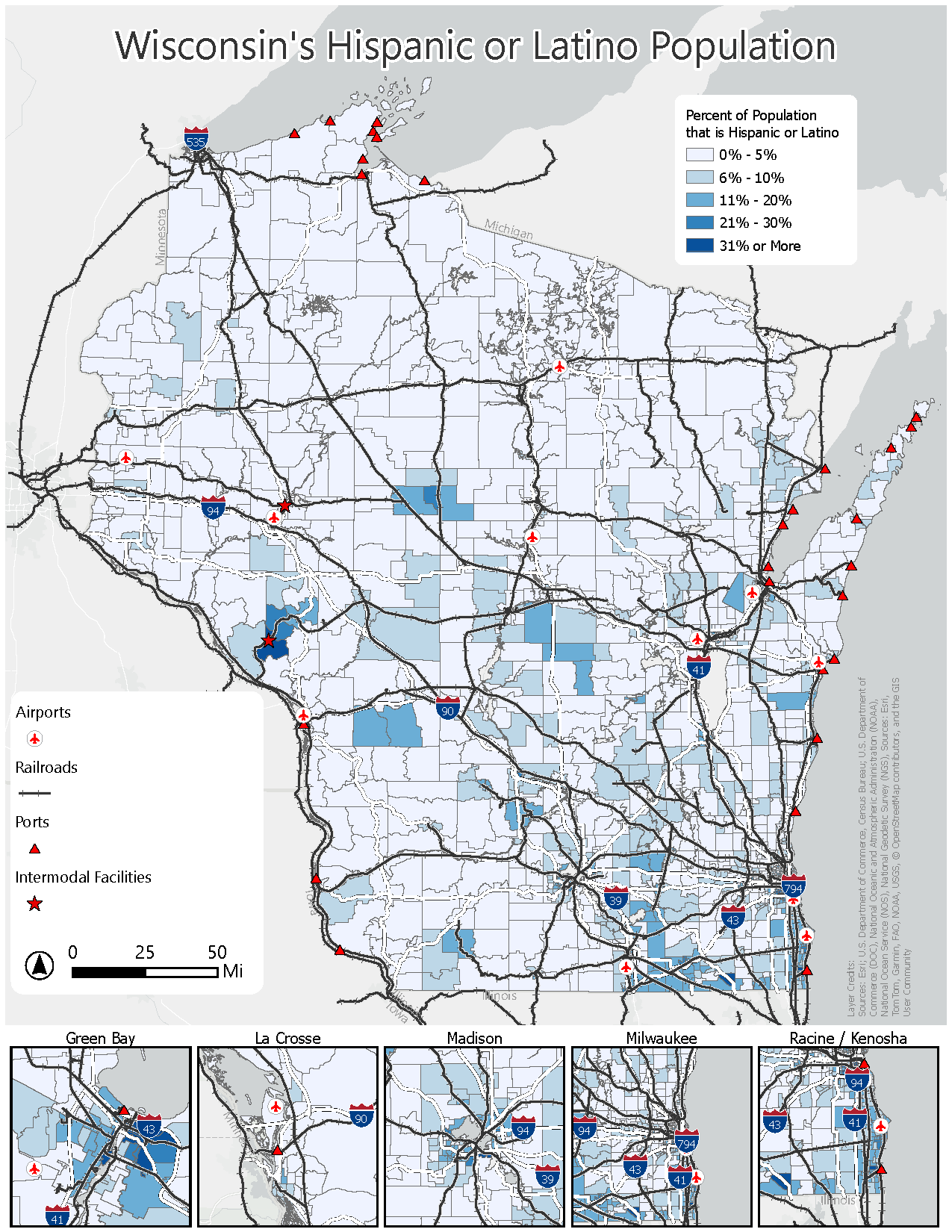
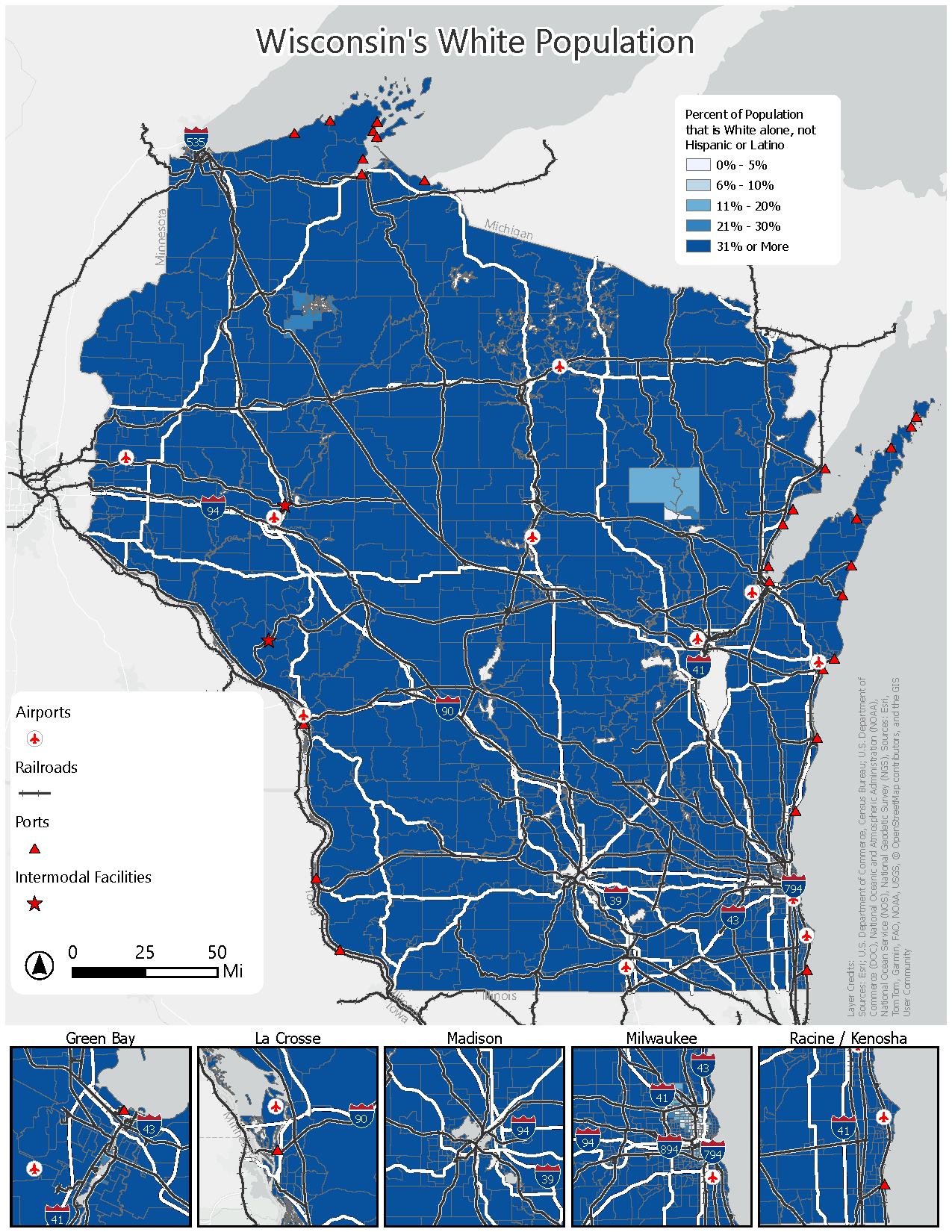
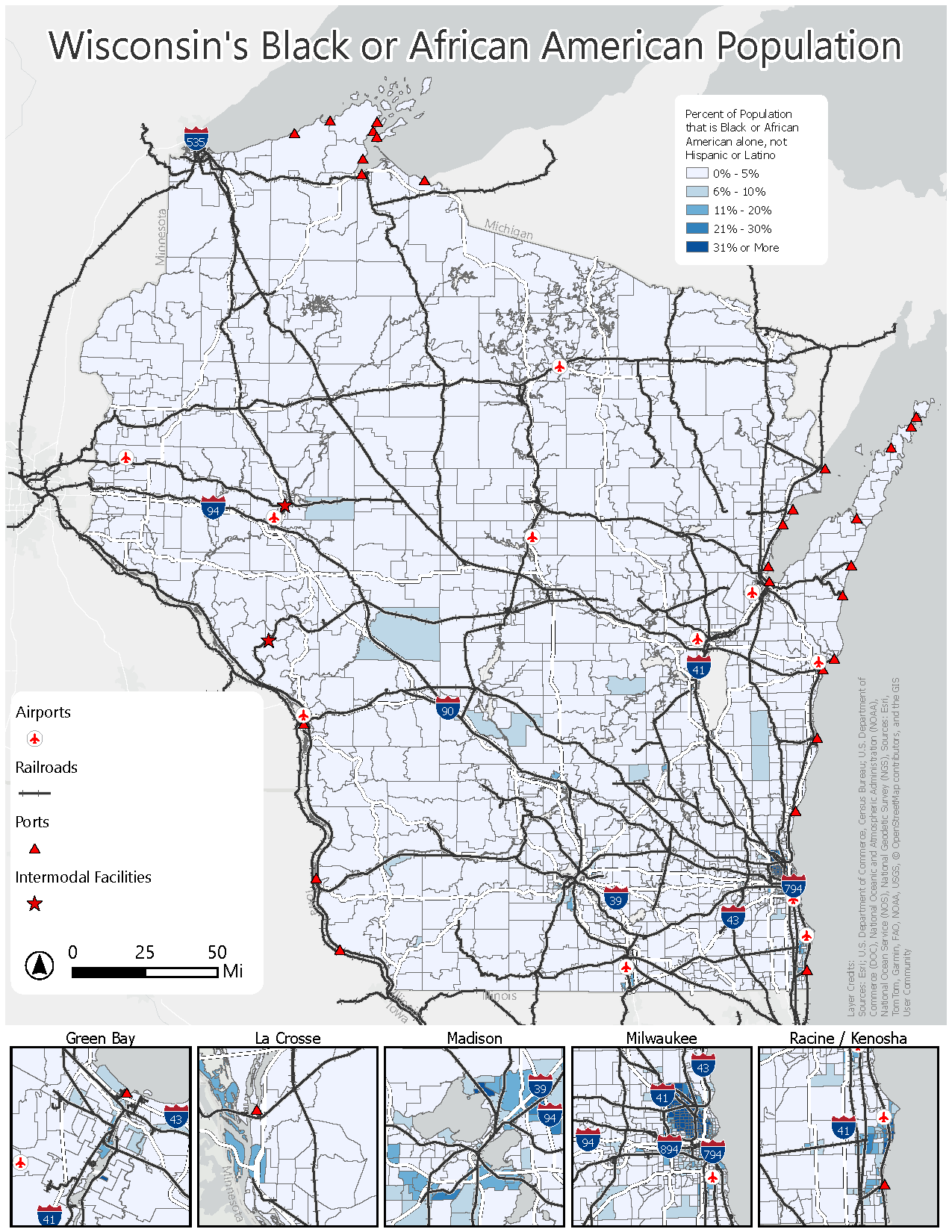
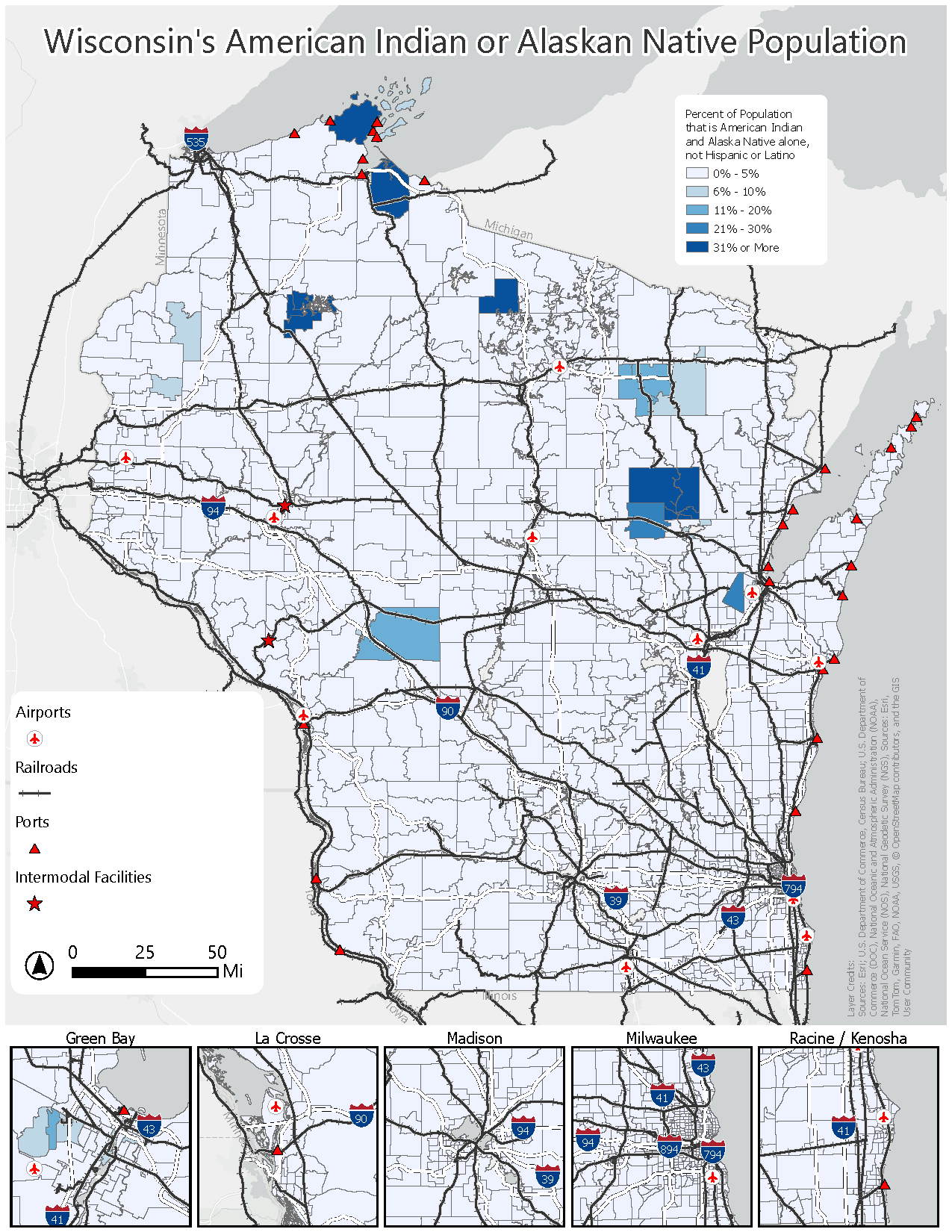
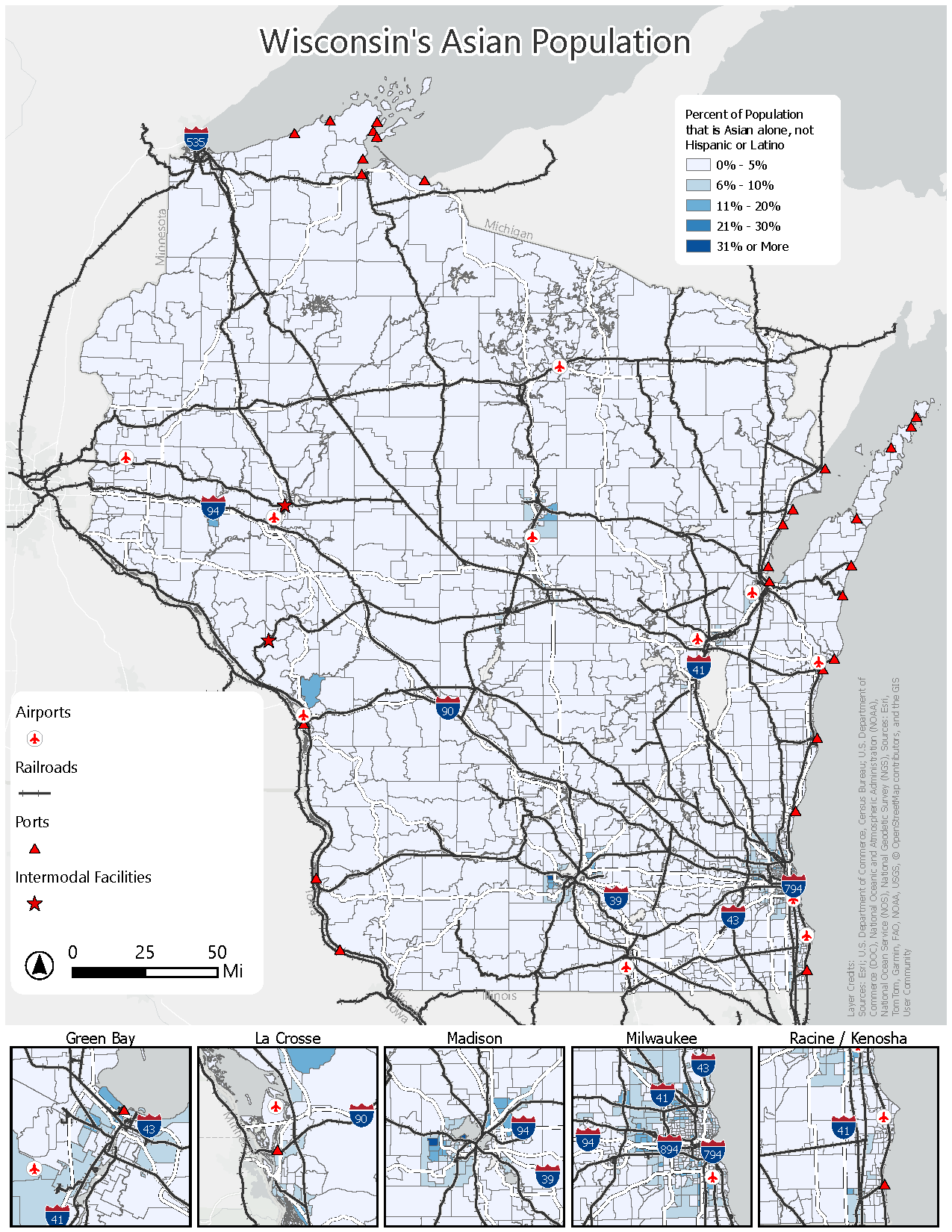
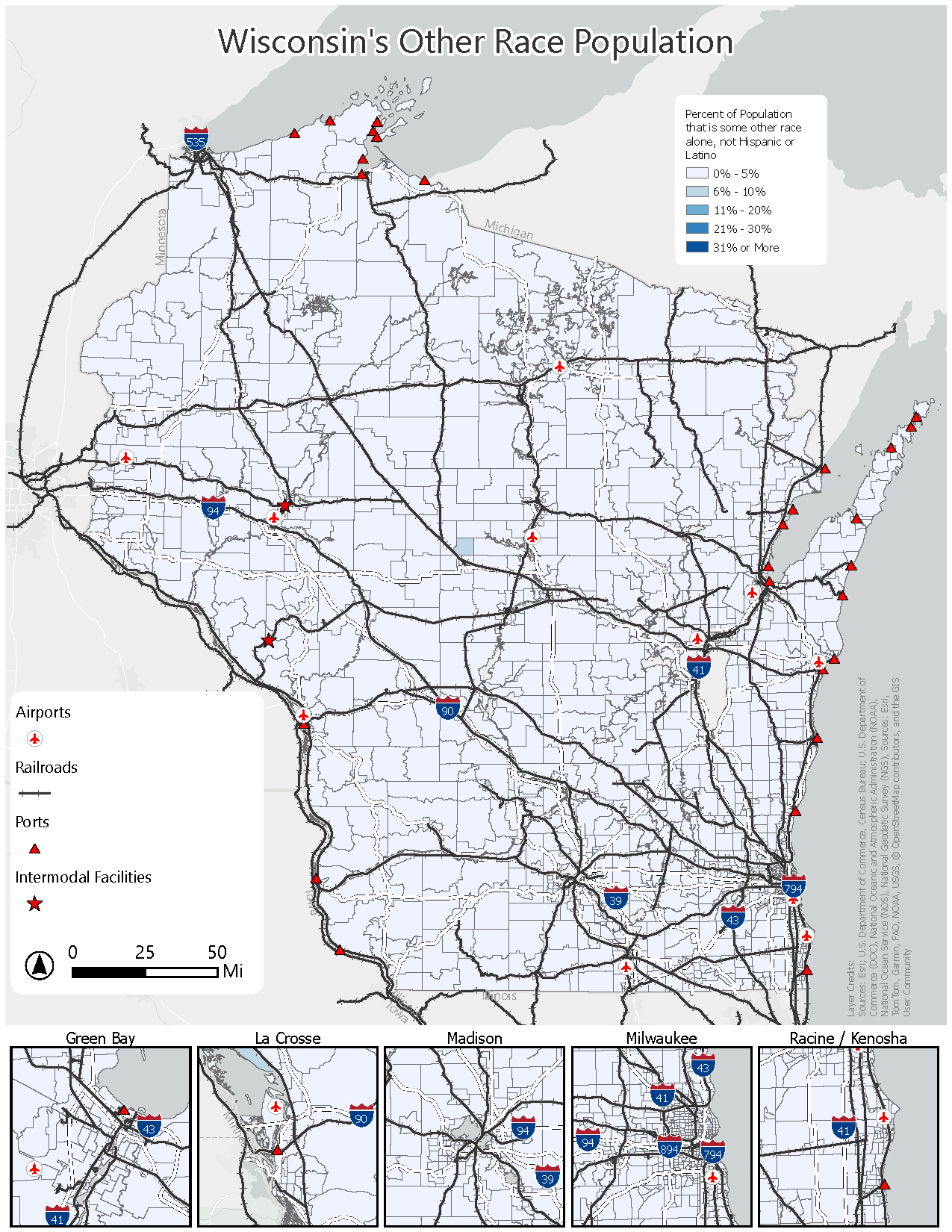
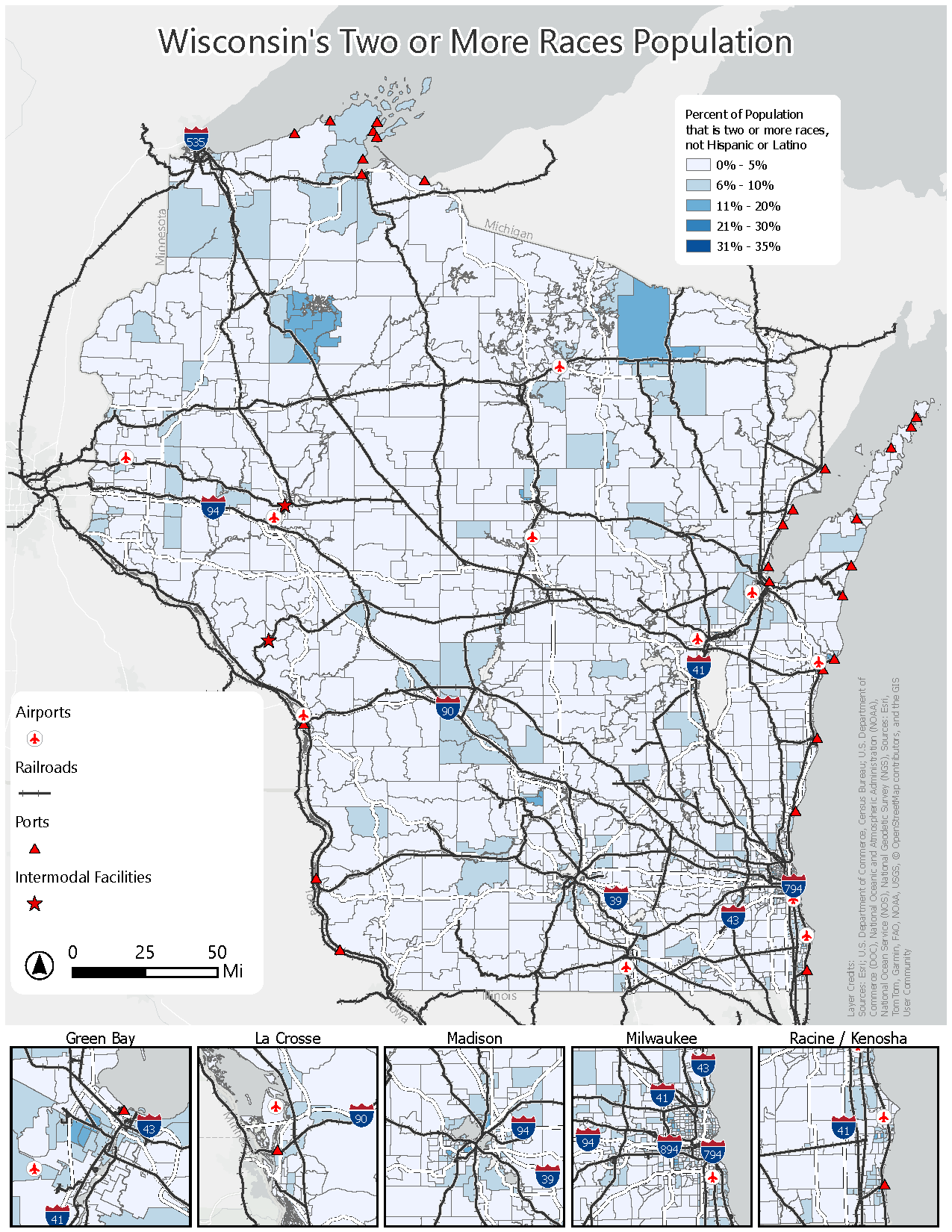
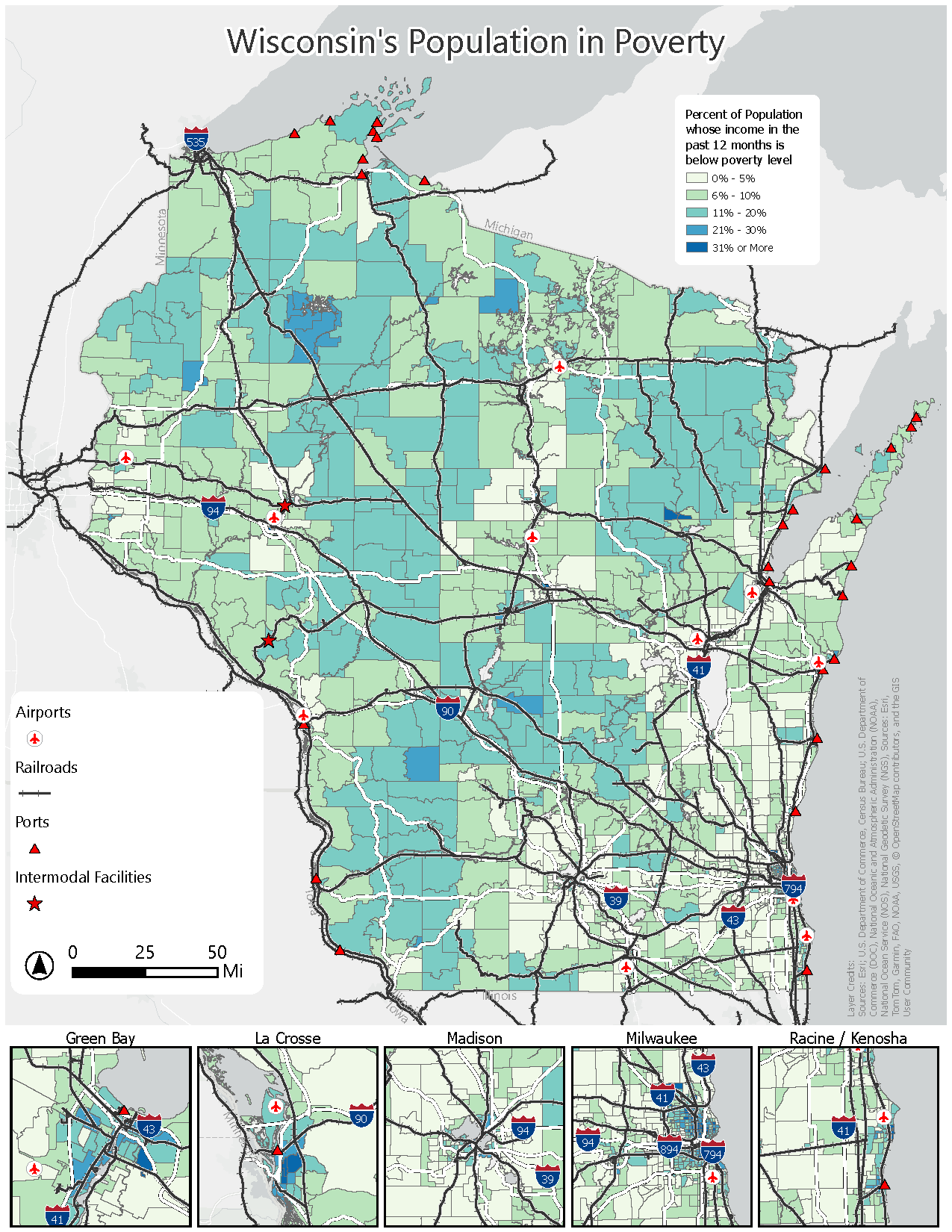
Map showing the majority of counties in Wisconsin are expected to have a decline in population between 2020 and 2030.
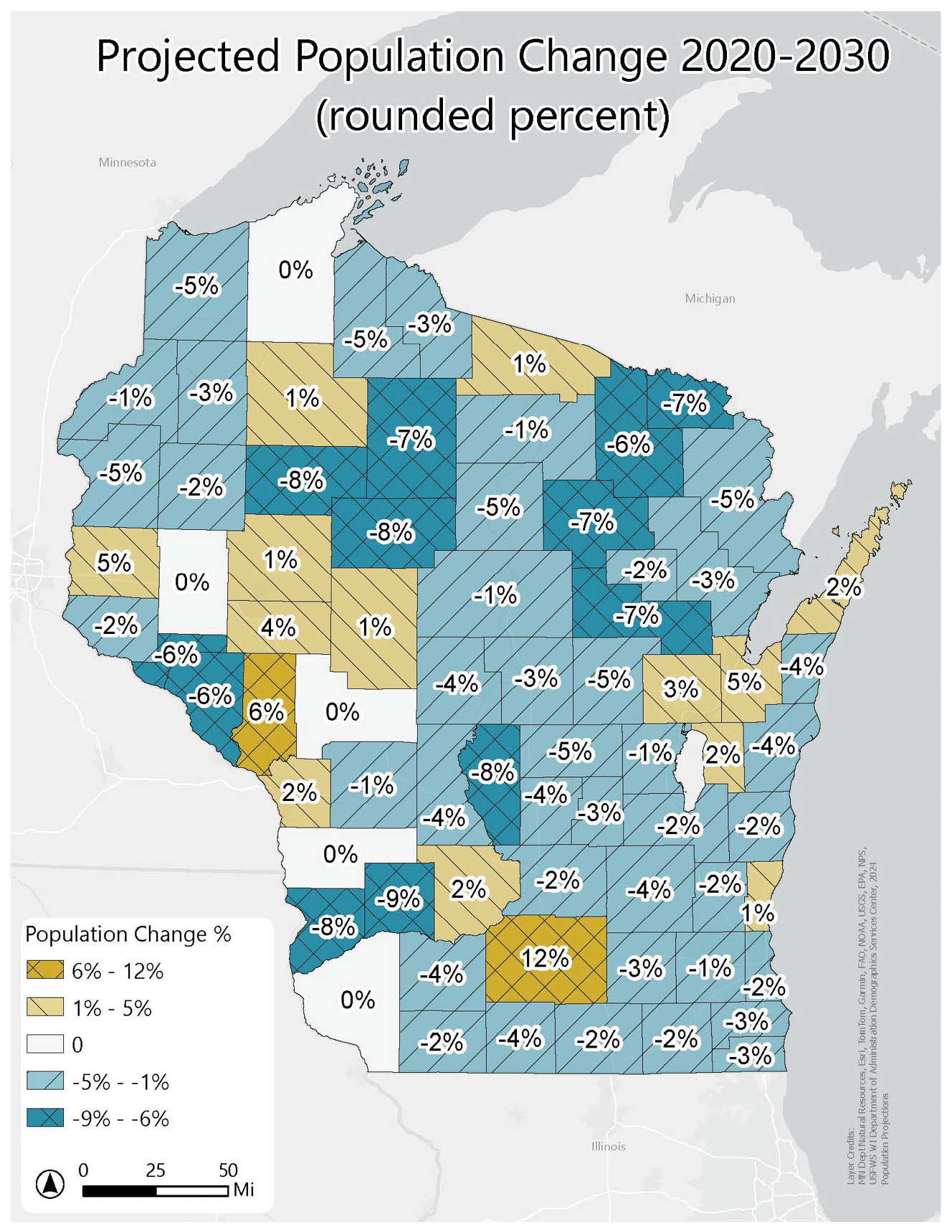
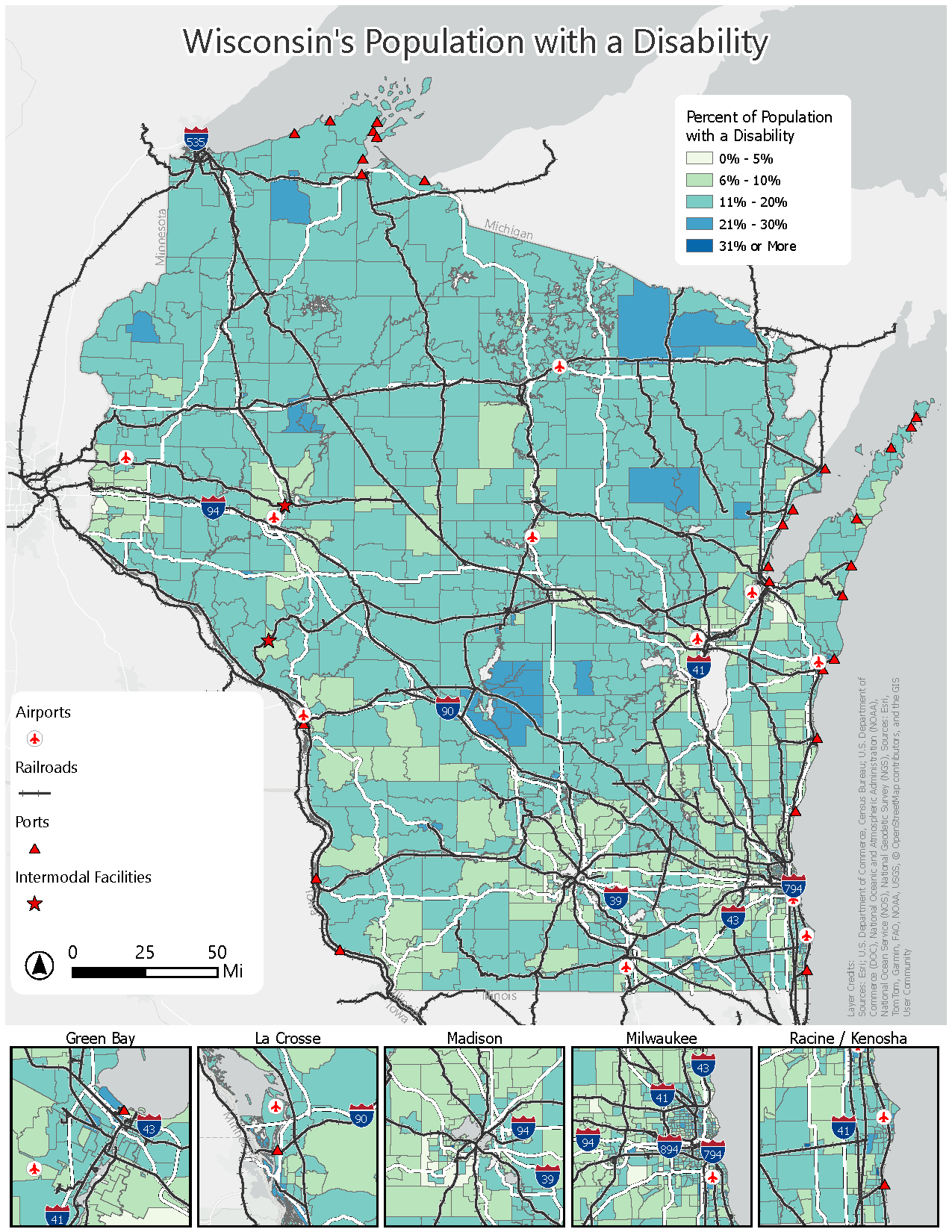
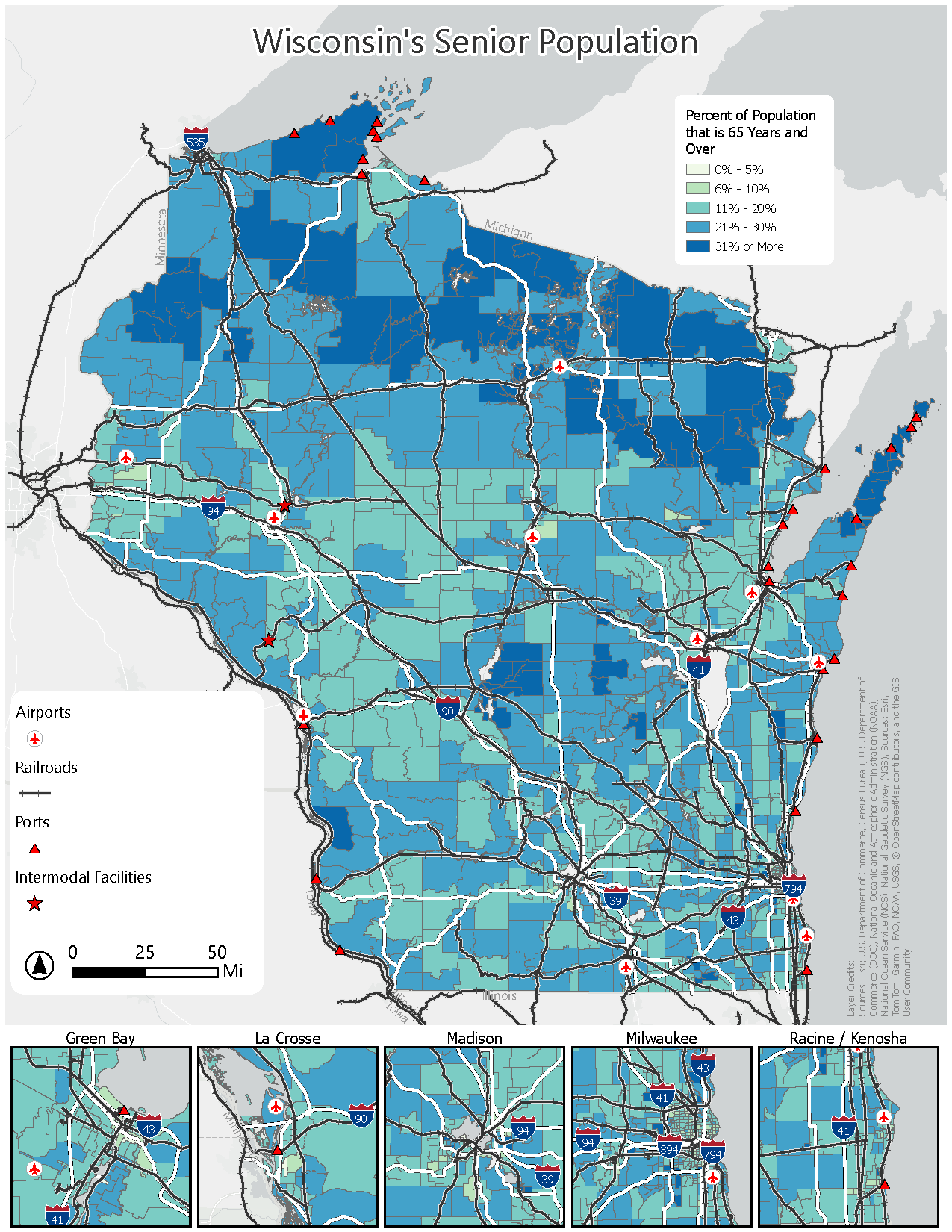
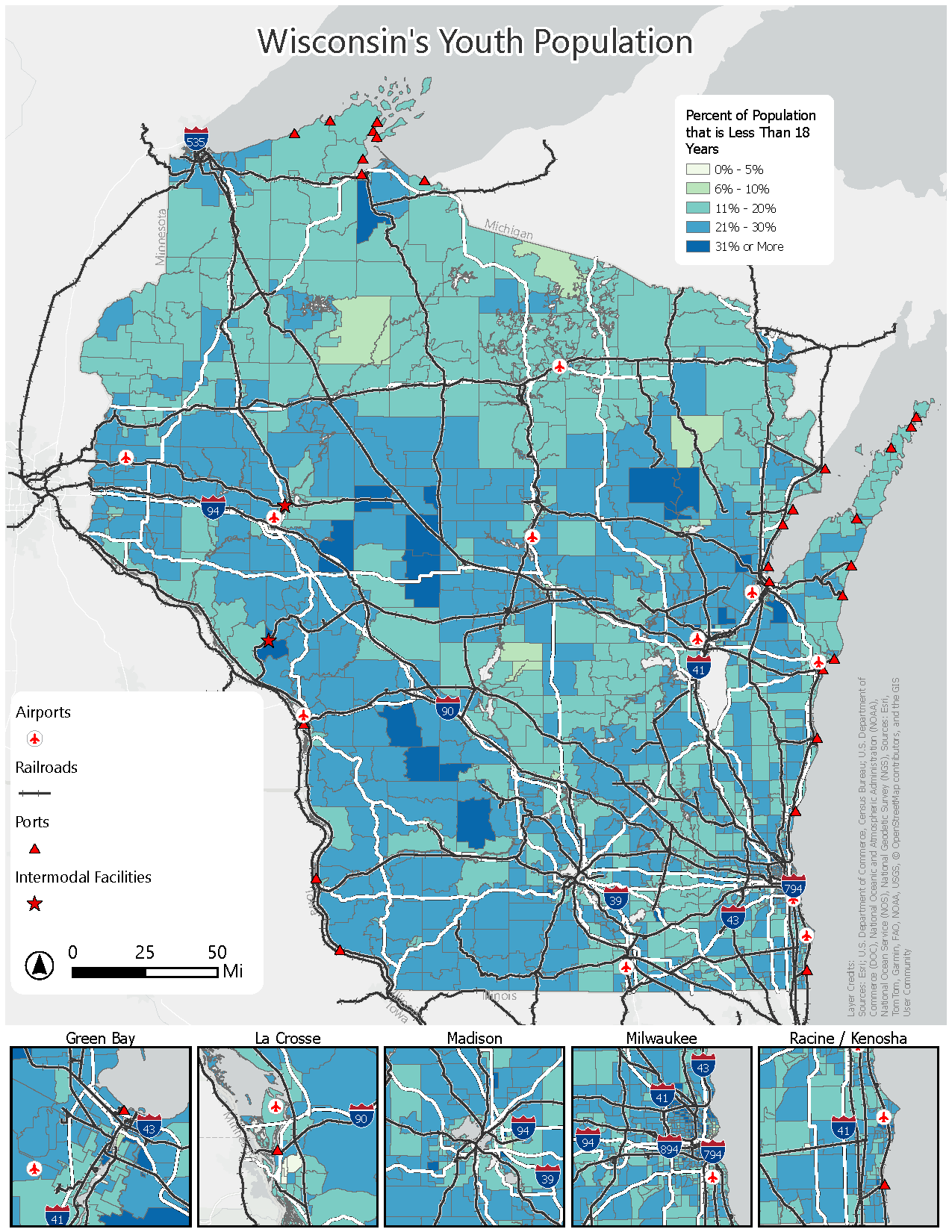
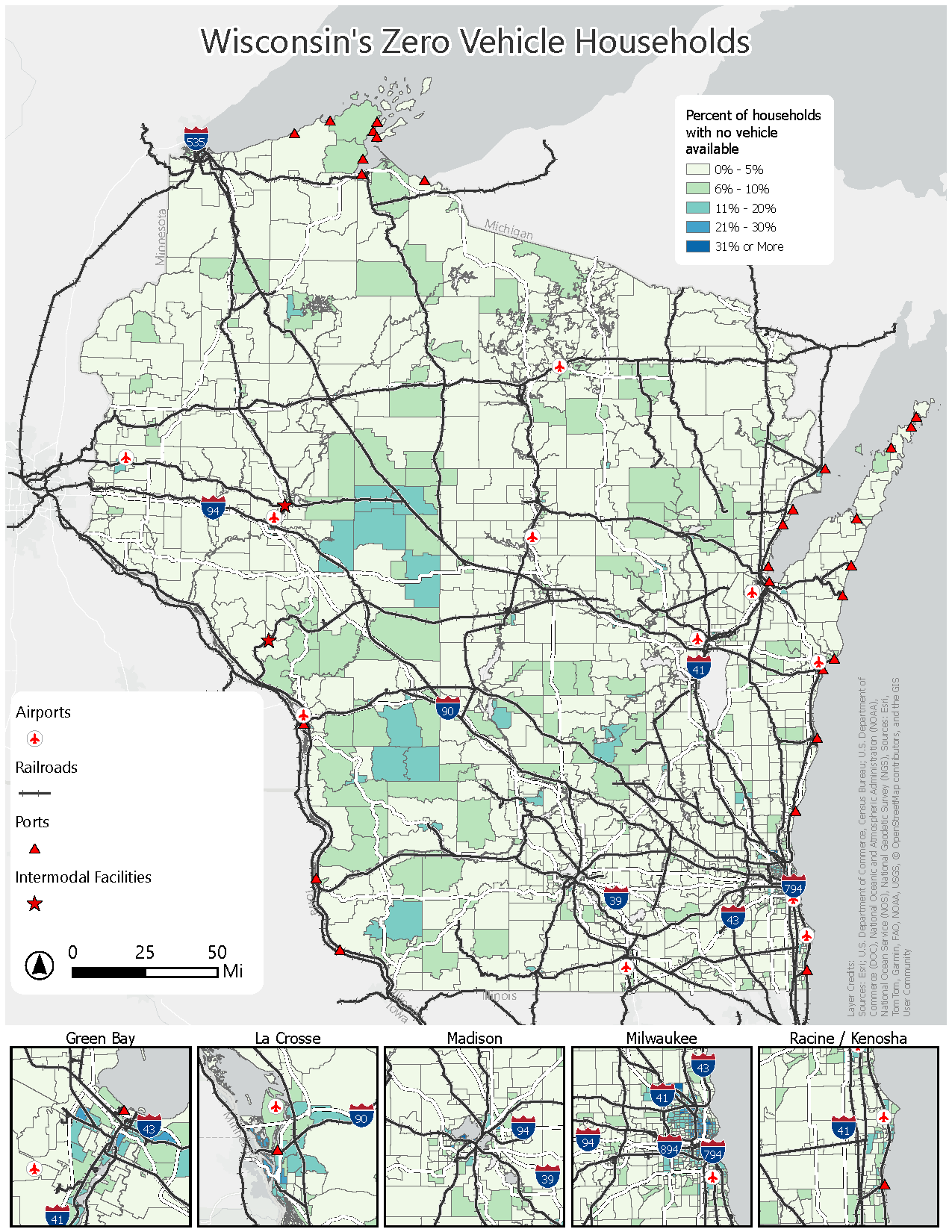
Explore the demographic maps below. Click each thumbnail to view a larger image.
Hispanic or Latino Population
White Population
Black Population
American Indian or Alaska Native Population
Asian Population
Other Race Population
Two or More Races Population
Population in Poverty
Disabled Population
Senior Population
Youth Population
Zero-Vehicle Households
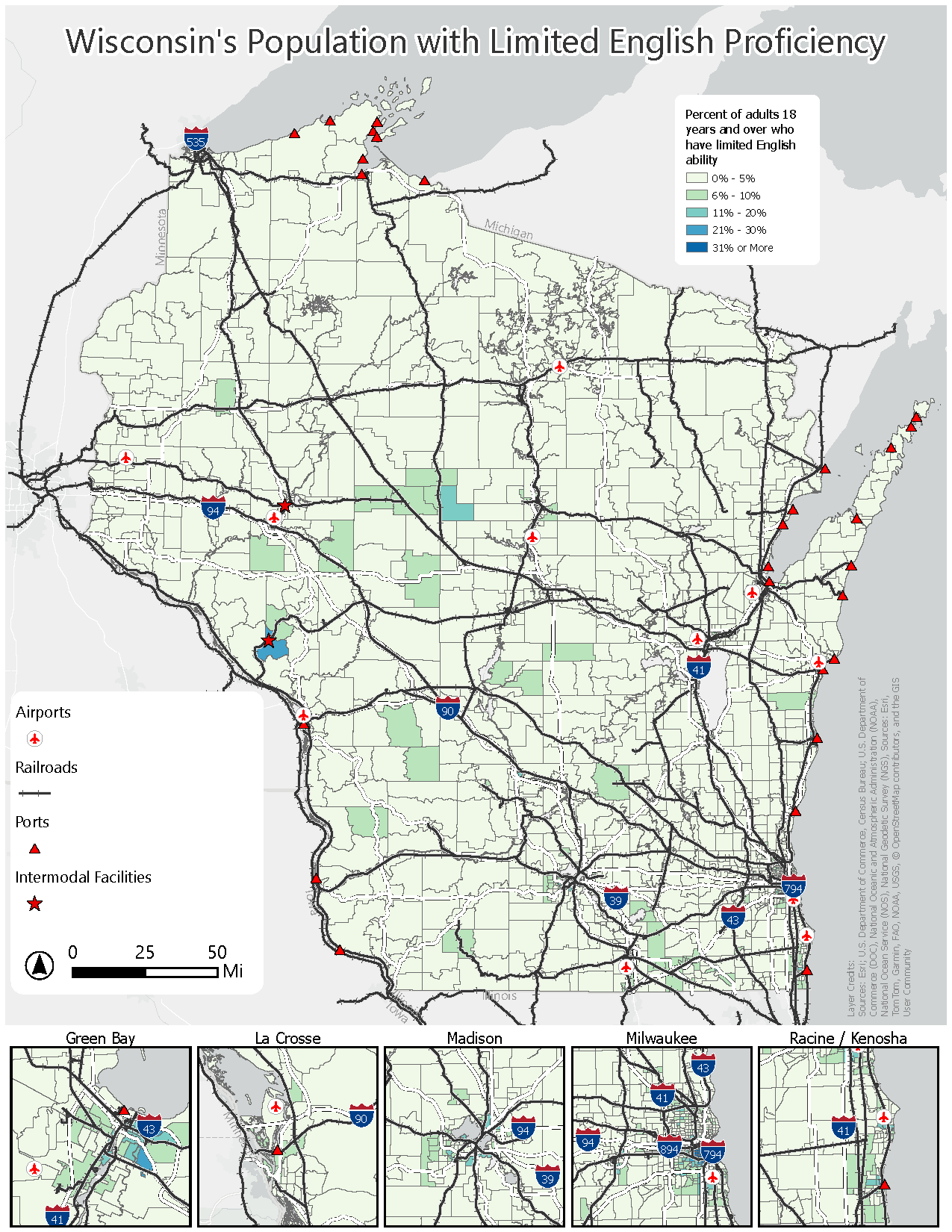
Limited English Proficiency
Innovative Technologies
- Alternative fuel technologies are expanding across freight transportation, with electric trucks gaining market share as 12% of new Class 7 and 8 trucks sold in 2025 were electric, up from roughly 2% in 2022, and forecasts suggesting electric medium- and heavy-duty trucks could represent 53% of market demand by 2035.
- Infrastructure remains a key challenge to adoption, as the U.S. had more than 3,500 public heavy-duty charging stations in 2025, while fleet operators continue to balance vehicle costs, charging needs, and electric grid capacity constraints.
- Alternative fuels are being tested across multiple freight modes, including rail and maritime transportation, while ports are investing in electrification technologies and benefiting from $4 billion in federal funding to support cleaner freight operations and emissions reductions.
Communication technology continues to evolve and be applied to all aspects of truck freight movement, from the cab to the trailer. Technological advances in communication enable the trucking industry to communicate more effectively.
- Connected and automated vehicle technologies are being explored to improve freight safety and efficiency, including advanced driver assistance systems, automated driving systems, and truck platooning, while Wisconsin law currently requires a driver in every truck.
- WisDOT is actively preparing for the future of freight technology through its Connected and Automated Vehicles program, collaborating with government, industry, and research partners to support the safe integration of emerging technologies as testing and deployment continue across the country.
Emerging technologies are helping freight transportation become safer, more efficient, and more resilient across trucking, rail, and logistics networks.
- Trucking companies are increasingly using advanced technologies such as route optimization software, predictive analytics, collision avoidance systems, lane departure warnings, and camera systems that provide visibility up to 80 feet behind a trailer to improve safety and operational efficiency.
- Railroads are expanding the use of automation and digital inspection tools, including sensors, drones, wayside detectors, and automated track monitoring systems that help identify equipment and infrastructure issues before they lead to service disruptions or derailments.
- Data-driven technologies are improving freight operations across all modes, with real-time shipment tracking, digital freight-matching platforms, machine learning, and predictive analytics providing end-to-end visibility and helping businesses respond more quickly to disruptions and changing demand.
Considerations for Specific Modes
Truck Parking Capacity
Truck parking shortages remain a significant freight challenge in Wisconsin, as limited parking capacity along key corridors can force drivers to park in unsafe or unauthorized locations such as highway shoulders and interchange ramps when legal spaces are full.
To address this issue, federal proposals have dedicated substantial funding for truck parking improvements, including $755 million through the proposed Truck Parking Safety Improvement Act and an additional $410 million in the FY27 transportation appropriations bill, while Wisconsin has continued to add truck parking capacity at Safety Weight Enforcement Facilities and Safety Rest Areas.
Freight Rail Capital Investments
- Wisconsin’s rail network has undergone significant consolidation over the past century, leaving less than half of its historic rail mileage still in service, while increased 286,000-pound railcar weight standards and clearance limitations continue to present challenges for some rail lines and freight movements within the state.
Regional Freight Shipping Patterns
- Chicago remains the Midwest’s primary rail hub, with approximately one in four U.S. freight trains passing through the region, and the CREATE program’s more than 70 completed projects and $5.8 billion in investments are expected to generate $31.5 billion in economic benefits by improving freight mobility, reducing delays, and increasing rail network efficiency.
Precision Scheduled Railroading and Limited Freight Rail Access
- Precision Scheduled Railroading (PSR) has changed freight rail operations by emphasizing fixed schedules and longer trains, improving railroad efficiency but reducing the number of service stops and available railcars for customers, particularly affecting businesses in regions between major hubs such as Chicago and Minneapolis.
- Wisconsin shippers increasingly depend on major rail hubs for freight connections, which can make rail service less accessible for some industries and smaller railroads, especially during seasonal demand peaks such as harvest periods when railcar availability is limited.
- Longer trains can create community impacts, including extended blockages at highway-rail crossings that may delay emergency responders, school transportation, and local travel, particularly in smaller communities with limited alternate routes.
Energy Transport via Waterway
Wisconsin's pipeline network plays a vital role in transporting petroleum products, but maintaining transportation resilience is important because disruptions can occur; as a result, ports and waterways provide critical backup capacity for products such as asphalt, pitch, and petroleum coke that are less suited for pipeline transport.
Inland Rivers and Great Lakes Intermodal
- Wisconsin’s ports are playing an increasingly important role in freight transportation, highlighted by the revival of Port Milwaukee, where freight tonnage increased 160% through March 2026 compared to the same period in 2025, strengthening the port’s position as a multimodal hub connecting water, rail, and highway transportation.
- Great Lakes and inland waterway ports continue to support regional and international trade, with the Port of Duluth-Superior remaining a key gateway for commodities and specialized cargo, including heavy-lift shipments, which were carried by nearly half of the 44 ocean-going vessels that visited the port in 2025.
- Emerging investments in inland river ports and container transport could expand freight opportunities, creating new connections between Midwest producers and global markets while increasing the role of waterways in the movement of goods.
Load Line Exemptions and Safe Harbor Distance
Freight movement by barge between Wisconsin and Illinois is limited to a small number of approved routes, with the Milwaukee-Calumet Harbor corridor serving as Wisconsin’s only certified Lake Michigan barge route, while strict Coast Guard restrictions and vessel requirements are used to maintain safe navigation and harbor access.
Soo Lock System Expansion
The ongoing modernization of the Soo Locks is a critical investment in the reliability of the Great Lakes freight system, as nearly 100% of the nation’s domestic iron ore supply passes through Sault Ste. Marie, with the new lock project scheduled to become operational in 2030 to improve long-term transportation resilience and capacity.
Shifting Demand
Air cargo remains an important freight option for time-sensitive and specialized shipments, and despite its higher costs compared to other modes, North American air cargo demand grew by 10.5% year over year while cargo capacity increased by 2.4%, reflecting continued demand for fast and reliable delivery of high-value goods.
Changing Air Cargo Components
Mail volume in the United States has declined dramatically from 213 billion pieces in fiscal year 2006 to 109 billion pieces in fiscal year 2025, a decrease of nearly 50%, as electronic communication, online billing, and e-commerce have transformed how people send and receive information and goods.
Air Cargo Growth in Wisconsin
Wisconsin’s air cargo network continues to evolve as airports compete with major regional hubs, with six of the state’s eight commercial service airports serving integrated cargo carriers such as UPS and FedEx. Regional growth is evident at nearby Rockford, which handled more than 3.4 billion pounds of cargo in 2025, a 9% increase from the previous year, while Milwaukee is investing in the future through an $80 million air cargo center featuring a 330,000-square-foot facility scheduled to open in 2026. These investments, combined with lower costs and available capacity outside Chicago O’Hare, are helping position airports in Wisconsin and the surrounding region for continued air cargo growth.
Air Cargo Regulation
The Federal Aviation Administration’s NextGen program modernized the nation’s air traffic system by transitioning from ground-based navigation to satellite-based guidance, and after more than 20 years of development beginning in 2003, the initiative reached full deployment in 2025, providing a foundation for safer, more efficient, and more resilient air transportation.
Pipeline Maintenance, Replacement, and Decommissioning
Following the permanent closure of the northern section of the West Shore Pipeline after a 54,600-gallon gasoline spill in 2012, a proposed new pipeline connection between Milwaukee and Jones Island could improve fuel distribution to Green Bay by enabling barge shipments, with each barge capable of replacing approximately 500 tanker truck trips.
Impacts To Other Freight Modes
While WisDOT has a limited oversight role related to pipelines, changes to this transportation mode can have significant impacts on freight movement because pipelines are an efficient means of moving large volumes of fuel and other products, and disruptions or shifts to truck, rail, or water transportation can increase congestion, infrastructure wear, environmental impacts, and transportation system demands.
Petroleum Market Volatility
Despite fluctuations in crude oil and petroleum markets during 2026, there has been no documented impact on petroleum or crude oil freight flows through Wisconsin, and concerns about reduced Canadian oil shipments to the United States remain unlikely due to the significant economic importance of cross-border energy trade for both countries.
Transload of Ocean Containers
To reduce costs and improve supply chain efficiency, freight moving in 40-foot ocean containers is often transferred into larger 53-foot domestic containers, helping shippers avoid fees such as demurrage and detention charges while making better use of container capacity and inland transportation networks.
Temperature-Controlled Intermodal Service
Refrigerated freight transportation is becoming increasingly important as global demand for temperature-sensitive products grows, with the cold chain packaging market projected to reach $33.7 billion by 2033 and grow at a compound annual rate of 13.5% between 2026 and 2033, driven by expanding food and biopharmaceutical industries that require stricter temperature controls throughout the supply chain.
Chapter 7: Network and System Needs
Wisconsin is committed to developing a transportation system that is prepared for the future. To do this WisDOT must assess the needs of freight movement based on the current and future demands by:
- Identifying the strengths and challenges of the existing system.
- Focusing on the goals and objectives of the freight system.
- Addressing future freight transportation demands for highways, rail lines, ports, airports, and pipelines.
- Identifying and analyzing future trends and technological advancements outside of the traditional forecasting methods which could impact the future of freight in Wisconsin.
Highway Overview
Wisconsin’s highway system is the foundation of the state’s freight network, carrying the majority of goods moved within, to, from, and through the state. WisDOT focuses on preserving roadway and bridge infrastructure, improving safety, reducing congestion, expanding freight mobility, and building resilience to weather and other disruptions. Ongoing investments help support both economic competitiveness and reliable freight movement statewide.
- Highways carry the largest share of freight, moving approximately 489 million tons of goods valued at $620 billion in 2023, representing about 70% of freight tonnage and 74% of freight value.
- Safety and mobility remain key priorities, with efforts focused on truck parking, truck safety, bottleneck reduction, incident management, and improved operations through Intelligent Transportation Systems (ITS) and 511 Wisconsin.
- System resilience and connectivity are increasingly important, with programs such as the Wisconsin Resilience Improvement Plan helping address risks from flooding, severe weather, and other disruptions that affect freight movement.
Railroads Overview
Railroads are a critical component of Wisconsin’s freight system, particularly for moving bulk commodities and supporting long-distance freight movements. WisDOT supports rail service through infrastructure investments, corridor preservation efforts, safety programs, and grant and loan programs that help businesses and communities maintain access to rail transportation. WisDOT continues to work toward improving rail accessibility, safety, efficiency, and resilience.
- Since 1980, Wisconsin has awarded more than $326 million in rail preservation grants and over $155 million in rail infrastructure improvement loans to support freight rail service and modernization.
- Wisconsin has more than 6,600 highway-rail crossings, and rail safety efforts continue to focus on reducing crossing incidents and discouraging trespassing, which remains a leading cause of rail-related fatalities nationwide.
- Freight rail volumes are expected to grow significantly, with national forecasts projecting 58% growth in rail ton-miles by 2050, increasing the need to address bottlenecks, weight restrictions, and access for smaller shippers.
Ports and Waterways Overview
Wisconsin’s ports and waterways connect the state to domestic and global markets through the Great Lakes-St. Lawrence Seaway System and the Mississippi River network. Maritime transportation supports industries, manufacturers, and agricultural producers while providing an efficient alternative to highway and rail freight. WisDOT invests in port infrastructure, navigation access, and intermodal connectivity to maintain reliable freight movement.
- Wisconsin’s 29 commercial ports and harbors have benefited from nearly $240 million in Harbor Assistance Program funding across 166 projects since 1980.
- Great Lakes and Mississippi River ports provide critical multimodal connections that support bulk commodities, agricultural exports, project cargo, and other freight movements throughout North America and beyond.
- Key priorities include maintaining locks, dams, navigation channels, docks, and intermodal connections while improving resiliency to changing water levels, severe weather, and supply chain disruptions.
Aviation Overview
Air cargo plays an important role in transporting high-value, low-weight, and time-sensitive goods that often have limited alternatives. WisDOT supports airport infrastructure, aviation planning, and emerging technologies that could expand freight and logistics opportunities in the future. Investments in airport facilities and air cargo capacity help maintain connections to national and international markets.
- Demand and pressure around time-sensitive shipments is high, which can be an operational barrier for communities with limited air cargo access. Emerging technologies could expand air cargo use outside urban cores.
- Milwaukee’s new air cargo facility is projected to handle 35-60 million pounds of exports and 30-45 million pounds of imports annually by 2029, growing substantially by 2032.
- Emerging technologies such as Advanced Air Mobility (AAM), cargo drones, and electric aircraft may create new opportunities for freight delivery and improved connectivity between urban and rural areas.
Pipelines Overview
Pipelines provide an efficient means of transporting large volumes of energy products and chemicals that are essential to Wisconsin’s economy. While pipeline infrastructure is owned and operated by private companies and regulated primarily by federal and state agencies, pipelines remain an important component of Wisconsin's multimodal freight system. WisDOT’s role focuses on coordination, transportation resilience, and supporting alternative freight movements when disruptions occur.
- Wisconsin’s pipeline network includes more than 80,000 miles of pipeline, transporting nearly 44 million tons of products valued at $8.7 billion in 2025.
- Pipeline safety performance has remained strong, with no major incidents involving fatalities or serious injuries reported between 2021 and 2025.
- In the event of disruptions, WisDOT supports system resilience by coordinating alternative transportation options and ensuring critical energy supplies can continue moving through truck, rail, and water networks.
Chapter 8: Freight Investment Implementation Plan
To help Wisconsin develop a transportation system prepared for the future, it is important to assess needs for freight movement based on current and future freight demands across all transportation modes.
Budget Process
Wisconsin DOT’s annual budget is set biennially. The 2025-2027 Biennial Budget was authorized by Wisconsin Act 15 in 2025. Funding beyond the current biennial budget is held constant (adjusted for inflation) to account for future project expenditures through the Statewide Transportation Improvement Program (STIP), except where legislative action impacts revenue or programming.
Freight Project Funding
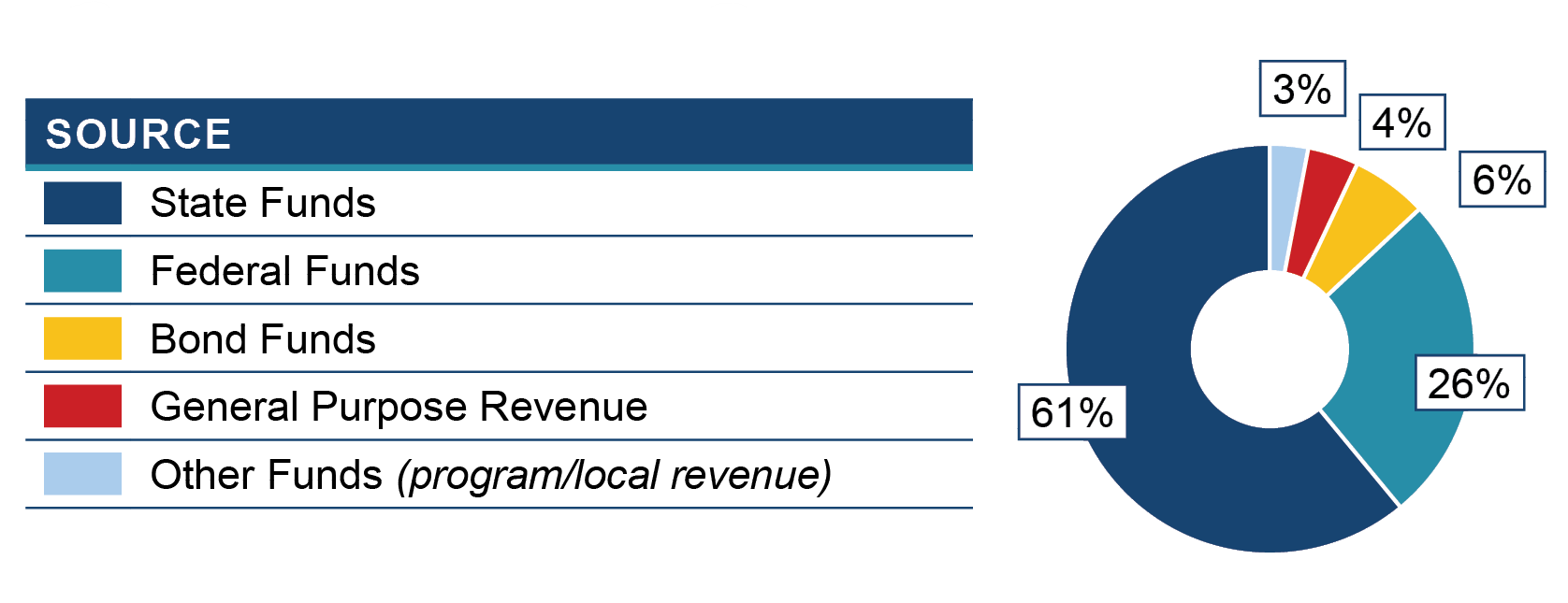
Prioritization of Freight Strategies and Projects
- Prioritize freight-related projects to maintain reliability, safety, mobility, and capacity.
- Prioritize freight-related projects that will provide a high return-on-investment.
- Support opportunities on a local level for freight mobility improvements including mode choice, truck bypasses, routes used for delivery, etc.
- Support potential new intermodal connections. Support planning level intermodal studies.
- Assess and potentially evaluate gaps (first and last miles) between manufacturing and shipping facilities and near multimodal centers.
 Prioritize freight-related projects to maintain reliability, safety, mobility, and capacity.
 Prioritize freight-related projects that will provide a high return-on-investment.
 Support opportunities on a local level for freight mobility improvements including mode choice, truck bypasses, routes used for delivery, etc.
 Support potential new intermodal connections. Support planning level intermodal studies.
 Assess and potentially evaluate gaps (first and last miles) between manufacturing and shipping facilities and near multimodal centers.
Freight Plan Implementation Steps
Freight plan implementation will be focused on several key areas:
- Supporting WisDOT’s overarching freight priorities for the transportation system through 2050
- Implementing mode-specific freight policies and strategies
- Using performance measures to track progress and identify issues
- Using data and tools to deliver plan policies and strategies
- Identifying and prioritizing Wisconsin-specific freight projects
- Coordinating with public and private sector freight stakeholders
- Serving as a resource for freight information
WisDOT anticipates updating the State Freight Plan on a four-year cycle, in accordance with federal requirements, including an update to the fiscally-constrained Freight Investment Implementation Plan section.
Developing this State Freight Plan required WisDOT to gather new data, update analytical tools, and engage freight stakeholders to help guide the state's future role in planning, investing in, and supporting Wisconsin’s freight transportation system. As this work continues, WisDOT remains committed to educating stakeholders and the public through ongoing analysis and resources, including recent reports such as the Intermodal Freight in Wisconsin - 2025 Update and the Wisconsin Statewide Truck Parking Study.
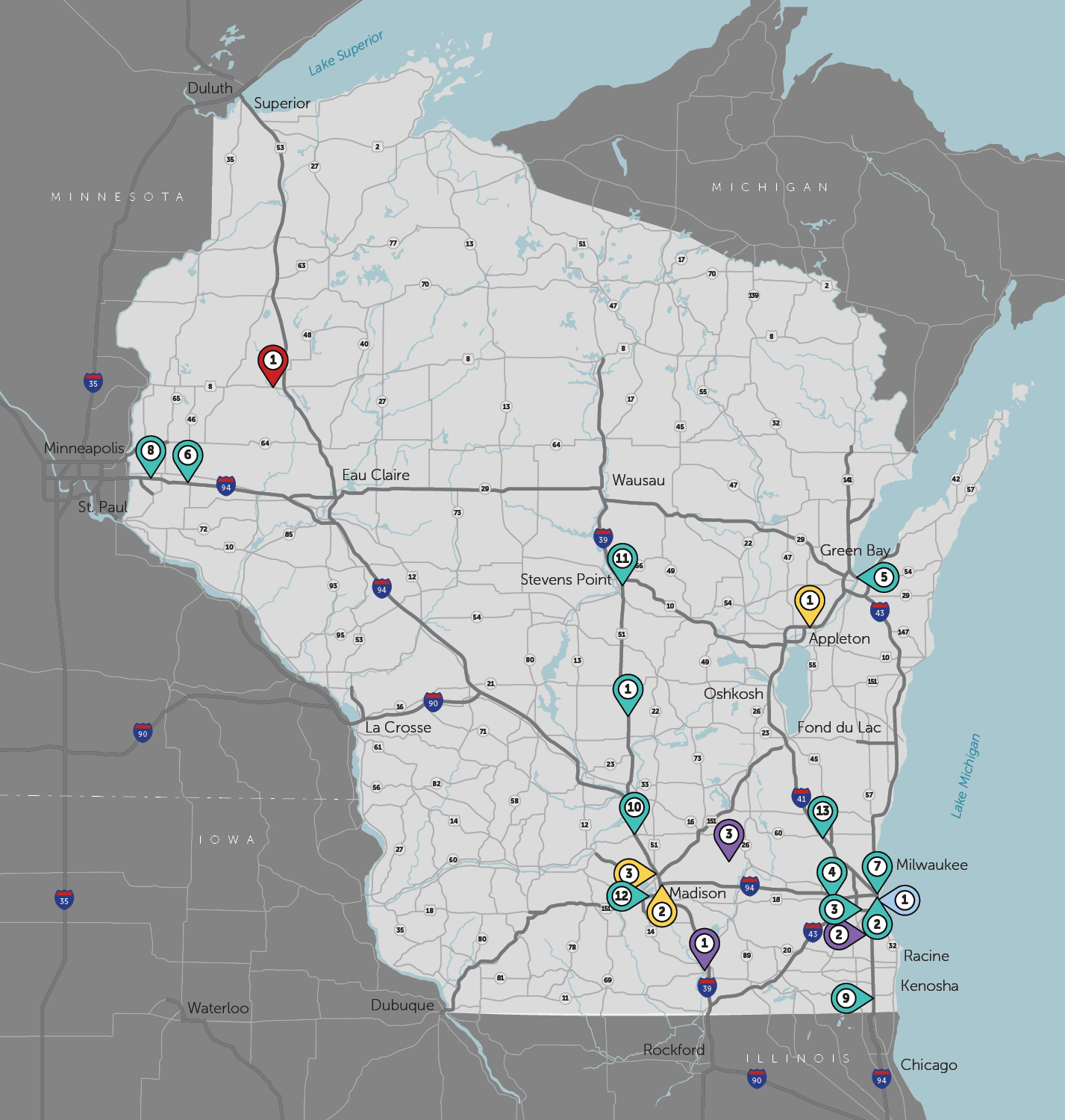
Where Do We Plan To Spend The Funding?
This map outlines the projects WisDOT plans to utilize National Highway Freight Program funds on (as of fall 2026). It is possible that this list may change.
Backbone
Federal Fiscal Year 2027
-
1I-29 Portage - Coloma - Fawn Court to Waushara Co Line, SB - Const/Resurface
Federal Fiscal Year 2028
-
2Valley Bridge (IH43/IH94) - Walker St to Menomonee River - Constr/BRRHB
-
3IH 41 Zoo Freeway - Howard Ave to UPRR - Const/Bridge Replacement
-
4IH 94 East West Freeway - STH 16 to Waukesha E Co Ln - Const/Resurface, Bridge Maintenance
Federal Fiscal Year 2029
-
5IH 43, City of Green Bay - Leo Frigo Bridge, B-05-0158 - Const Ops/BRRHB
-
6Hudson - Menomonie - CTH T to CTH BB (EB & WB) - Construction/Resurface
Federal Fiscal Year 2030
-
7EW Freeway - Marquette I/C - Constr/RSRF20
-
8Hudson - Baldwin - U.S. 12 to STH 65 (EB & WB) - Construction/Resurface
Federal Fiscal Year 2031
-
9IH 41 NS Freeway Kenosha - IL State Line to Racine City Ln - CONST/PSRS30
-
10Madison - Portage - STH 60 to CTH CS - Construct/RSRF20
Federal Fiscal Year 2032
-
11Plainfield - Stevens Point - STH 54 to N 2nd Street - Constr/Resurface
-
12Madison - Cambridge - U.S. 18 to IH 39 - Construct/RSRF10
-
13Milwaukee - Fond du Lac - U.S. 45 to STH 144 - Const/PVRPLA
Majors
Federal Fiscal Year 2027
-
1I-41 Appleton - De Pere - Meade St. - Holland Road Const/Reconst with Mainline Expansion
Federal Fiscal Year 2030
-
2Madison - Portage - CTH BB/Cottage Grove Rd, B-18-972 - Const/Reconst
Federal Fiscal Year 2031
-
3Madison - Deforest - U.S. 151 to Kinsman Blvd - Construct/Env Doc to PS&E/Reconst
PHFS Intermodal Connector
Federal Fiscal Year 2027
-
1S. Lincoln Memorial Drive Jones St. - I-794 Reconstruction
Railroad
Federal Fiscal Year 2028
-
1Janesville RR Bridges
Federal Fiscal Year 2029
-
2Muskego Yards CRISI Grant - Muskego Yard Freight Tracks - EX-Const/New Track Structures & Track
Federal Fiscal Year 2030
-
3Crawfish River Bridge
Critical Rural Freight Corridor
Federal Fiscal Year 2032
-
1Turtle Lake - Cameron - N Wye Street to CTH O - Construction/PVRPLA